Why the Inverter Matters More Than the Panel Brand
By the Solanano Editorial Team | Updated July 2026
Key Takeaways
- The solar inverter — not the panel — is now the primary driver of system ROI, energy intelligence, and long-term resilience.
- GaN-based inverters have crossed the 99% efficiency threshold for the first time in residential applications, making inverter selection a critical performance variable.
- AI-integrated inverters are delivering up to 30% gains in energy efficiency through real-time consumption forecasting and weather-adaptive tracking.
- California homeowners navigating NEM 3.0 face a fundamentally different financial landscape — one where dynamic energy management (an inverter function) matters far more than raw panel wattage.
- The U.S. DOE has opened a formal cybersecurity review of Chinese-manufactured smart inverters, making brand provenance a real due diligence concern in 2026.
- Standalone solar-only inverters are being phased out; hybrid-ready platforms with battery integration are now the baseline for any serious residential system.
The Panel Brand Debate Is the Wrong Conversation
Walk into any solar sales pitch and you'll hear the same script: "We use Tier 1 panels, the best in the industry." It sounds reassuring. It's also, increasingly, beside the point.
Here's the uncomfortable truth that the broader solar industry has been slow to acknowledge: panel technology has largely converged. N-type solar modules in 2026 now achieve annual degradation rates of just 0.25% to 0.4%, according to Energy Solutions — an engineering milestone that effectively pushes expected module lifespan well past 30 years. When the glass on your roof is going to outlast your mortgage, the panel brand stops being the critical variable in your system's performance story.
So what is? The inverter. Specifically, the intelligence, architecture, and grid capabilities baked into it.
"In 2026, the panel brand is essentially a commodity choice. The real intelligence — and the real profit — lives in the inverter's ability to play the energy markets in real-time." — Dr. Aris Thorne, Chief Technologist at SolarFlow Systems
What an Inverter Actually Does (And Why It's Getting More Complicated)
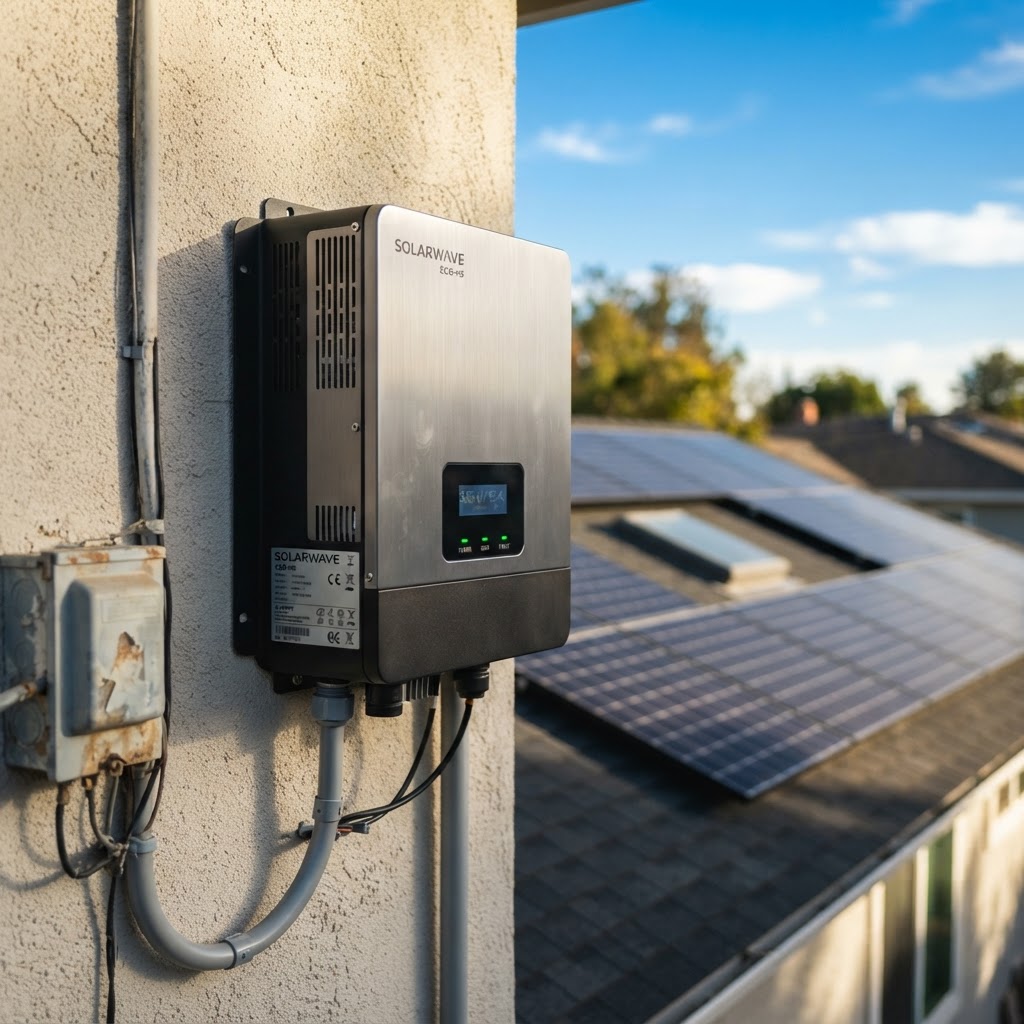
Most homeowners understand the basic function: the inverter converts the DC electricity your panels generate into AC electricity your home can use. Simple enough. But that description is about as accurate as calling a smartphone "a device that makes calls."
Modern residential inverters in 2026 are doing all of the following — often simultaneously:
- Maximum Power Point Tracking (MPPT): Continuously optimizing the electrical load to extract peak power under changing light and temperature conditions
- Grid-forming and grid-following: Actively supporting voltage and frequency stability on the local grid, not just passively feeding power into it
- Battery charge and discharge management: Coordinating with storage systems to maximize self-consumption or respond to time-of-use (TOU) pricing windows
- Real-time consumption forecasting: AI-integrated platforms are now delivering up to 30% gains in energy efficiency by predicting household load and weather patterns hours in advance, according to Global Market Insights
- Vehicle charging coordination: Direct DC-to-EV integration within newer inverter platforms eliminates an AC conversion step entirely, speeding residential EV charging by approximately 20%
- Energy market participation: In markets with dynamic pricing structures — like California's NEM 3.0 environment — advanced inverters can execute automated export and import decisions based on real-time grid pricing signals
This is why Dr. Thorne's framing resonates so strongly with engineers: the inverter is where the financial returns on your solar investment are actually generated or squandered.
NEM 3.0 Makes Inverter Intelligence Non-Negotiable in California
If you're a California homeowner served by PG&E, SCE, or SDG&E, you already know that the solar economics changed significantly under NEM 3.0. Export compensation rates dropped dramatically. The simple "spin the meter backward" model is gone. What replaced it is a time-differentiated value structure where when you export matters enormously — and self-consumption optimization has become the primary lever for financial returns.
A dumb inverter — one that simply converts and pushes — cannot navigate this environment effectively. It will export your cheapest midday solar power and buy back expensive evening electricity, quietly eroding your payback period with every passing month.
An intelligent hybrid inverter, by contrast, will:
- Charge your battery during peak solar generation
- Hold that stored energy to offset evening on-peak rates
- Export strategically during the highest-value grid pricing windows
- Adapt its behavior as your household consumption patterns evolve
At Solanano, our hyperlocal financial modeling — built specifically around NEM 3.0 rate structures and utility-specific tariff data from SCE, BWP, and others — consistently shows that inverter and battery platform selection can swing projected 10-year returns by $8,000 to $15,000 on a typical residential system. That's not a rounding error. That's the difference between a good investment and a great one.
The Technology Shift: GaN, AI, and the 99% Threshold
The engineering progress inside modern inverters is genuinely remarkable and deserves more attention than it gets.
Gallium Nitride (GaN) semiconductors have been the quiet revolution. As of 2025, GaN-based PV inverters have captured 31.2% of the market and pushed residential efficiency rates above 99% for the first time, according to Growth Market Reports. To put that in context: a conventional silicon-based inverter operating at 96–97% efficiency loses 3–4% of every kilowatt-hour your panels generate. On a 10 kW system producing 15,000 kWh annually, that's 450–600 kWh of energy simply disappearing in conversion losses every year. GaN narrows that gap substantially.
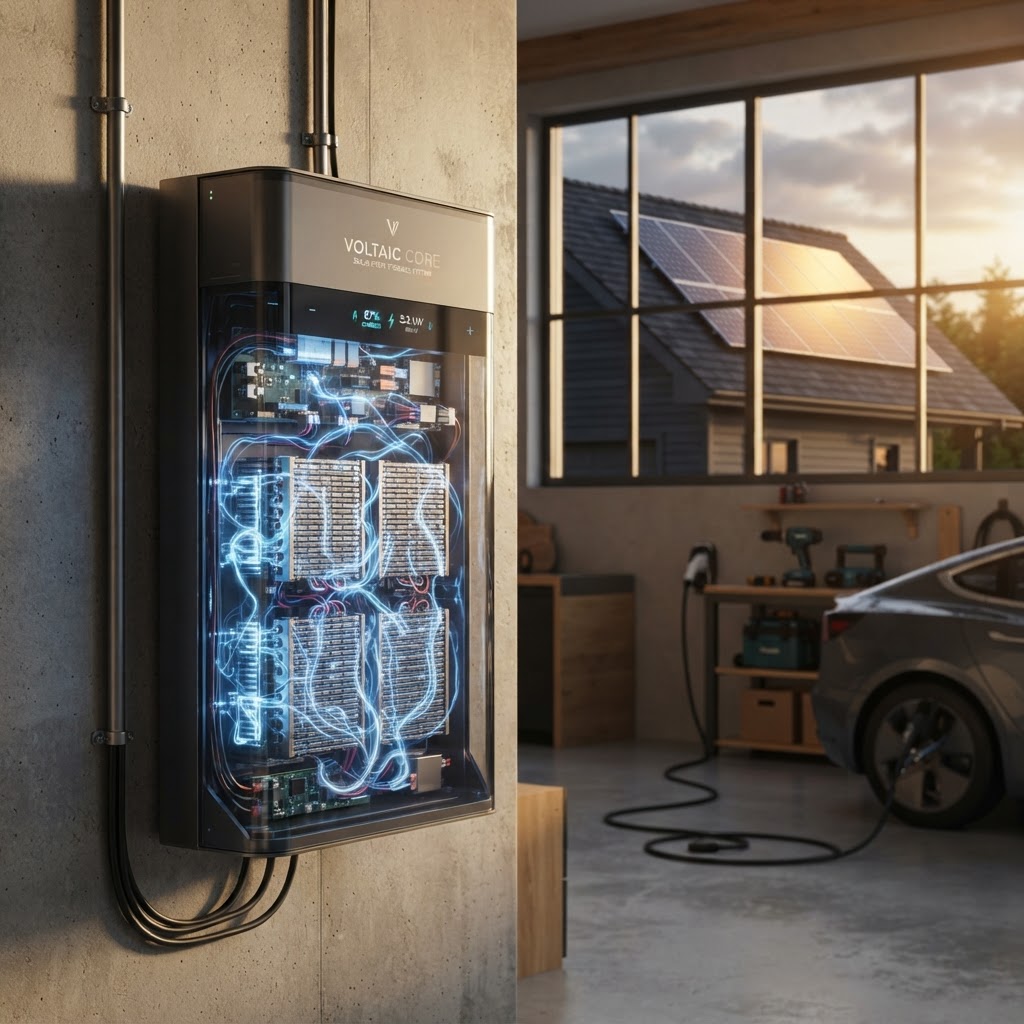
AI-driven Home Energy Management Systems (HEMS) have further redefined the inverter's role. By late 2025, the rise of these platforms officially repositioned the inverter as what industry analysts are calling the "Building Brain" — the central nervous system coordinating solar generation, battery storage, EV charging, HVAC load management, and grid interaction under one optimization layer.
The practical implication for homeowners: the inverter you choose is not just hardware. It's the operating system your home will run on for the next decade.
The Security Dimension: Why Inverter Brand Provenance Now Matters
This is a conversation Solanano is having with clients more frequently in 2026, and it's one the broader market can no longer avoid.
In July 2026, the U.S. Department of Energy initiated a formal review of cybersecurity standards for Chinese-manufactured smart inverters over concerns about grid stability vulnerabilities. This isn't abstract geopolitical noise — it has direct implications for California homeowners whose grid-connected inverters communicate bidirectionally with utility infrastructure.
When an inverter has grid-forming capabilities (now being mandated in Europe for all new residential installations as of Q1 2026), it can actively influence local voltage and frequency. A compromised inverter fleet at scale is a grid security concern. The DOE review signals that procurement decisions — including which inverter brands are approved for incentive programs and utility interconnection — may shift in the near term.
This is precisely the kind of regulatory and technical intelligence that's difficult for a homeowner, or even a generalist installer, to track. It's the type of vetting that Solanano's four-stage qualification process is built to address — ensuring that every installer and equipment recommendation in our network reflects current compliance, performance, and security standards.
The Mandatory Battery Shift and What It Means for Your Decision
The solar industry crossed an important threshold in 2026: standalone solar-only inverters are being actively phased out in favor of hybrid-ready platforms that treat battery storage as a default, not an add-on.
The Wood Mackenzie data illustrates this clearly. The global solar inverter market is projected to contract by 9% in 2026 — not because demand is falling, but because the industry is pivoting away from volume-based panel installation toward high-intelligence hybrid upgrades. The unit count drops; the value per unit climbs.
For California homeowners, this aligns perfectly with the state's energy resilience imperative. Between PSPS wildfire shutoff events, grid congestion during heat emergencies, and the financial logic of NEM 3.0's battery-friendly export windows, solar plus storage is not a luxury configuration in 2026 — it's the baseline that makes economic and practical sense.
California's SGIP (Self-Generation Incentive Program) continues to provide meaningful rebates for battery storage in qualifying utility territories, which Solanano factors directly into our system financial models. If you're sizing a system today without accounting for storage and a hybrid inverter platform, you're engineering for 2019.
"A panel is just a window; the inverter is the architect. If your inverter doesn't have grid-forming capabilities by now, you aren't building a power plant, you're building a liability." — Elena Rodriguez, Lead Grid Modernization Strategist at EnerGrid
What to Look For When Evaluating an Inverter in 2026
Not all inverters sold by licensed installers are created equal. Here's a practical framework:
- Hybrid-ready architecture: Native battery integration, not an afterthought add-on port
- GaN-based or advanced silicon platform: Targeting ≥98% efficiency under California-specific temperature and irradiance conditions
- AI/HEMS integration: Compatibility with or native support for smart home energy management
- Grid-forming capability: Essential for resilience and increasingly required by evolving utility standards
- Cybersecurity posture: Firmware update cadence, manufacturer domicile, compliance with emerging DOE standards
- Manufacturer warranty and monitoring: 10–12 year baseline warranty; cloud-based performance monitoring with anomaly alerts
- NEM 3.0 optimization features: Time-of-use export scheduling, automated demand response enrollment capability
Bottom Line
Panels generate energy. Inverters generate returns. In 2026, with panel technology commoditized, NEM 3.0 reshaping California's solar economics, and the inverter now functioning as your home's primary energy intelligence layer, the most consequential decision in any solar project isn't which panel brand you choose — it's which inverter platform will manage your energy for the next decade.
Ready to find out which inverter and storage platform is actually right for your home, utility territory, and financial goals? Get a free, no-obligation solar assessment from Solanano — California's independent solar advisory service — and let our hyperlocal modeling show you exactly what your system should look like before any installer sets foot on your roof.