Transparent Solar Glass: Windows That Generate Electricity in 2026
Key Takeaways
- Transparent solar glass has crossed a critical efficiency threshold in 2026, with researchers achieving 12.3% power conversion efficiency at 30% visible light transparency — ending the "gimmick" era for good.
- The global solar PV glass market is projected to hit $35.7 billion by end of 2026, growing to $15 billion specifically for transparent glass by 2035 at a 21.1% CAGR.
- Commercial-scale manufacturing is now real: NEXT Energy Technologies scaled production to 40" × 60" organic photovoltaic windows in January 2026.
- The value proposition has fundamentally shifted — transparent solar glass now competes on total cost of ownership against traditional curtain walls, not just energy output.
- California homeowners and developers should pay close attention: BIPV (Building-Integrated Photovoltaics) intersects directly with NEM 3.0 financial modeling, SGIP battery incentives, and increasingly aggressive state energy codes.
From Science Fair Project to Functional Semiconductor
For years, transparent solar glass occupied an awkward middle ground — too inefficient to justify the premium, too promising to dismiss. That conversation is definitively over in 2026.
"By 2026, we have moved past the 'gimmick' phase," says Dr. Elena Vance, Lead Researcher at the Institute for Urban Photovoltaics. "Transparent glass is no longer just a window; it is a functional semiconductor that happens to be clear enough to see through."
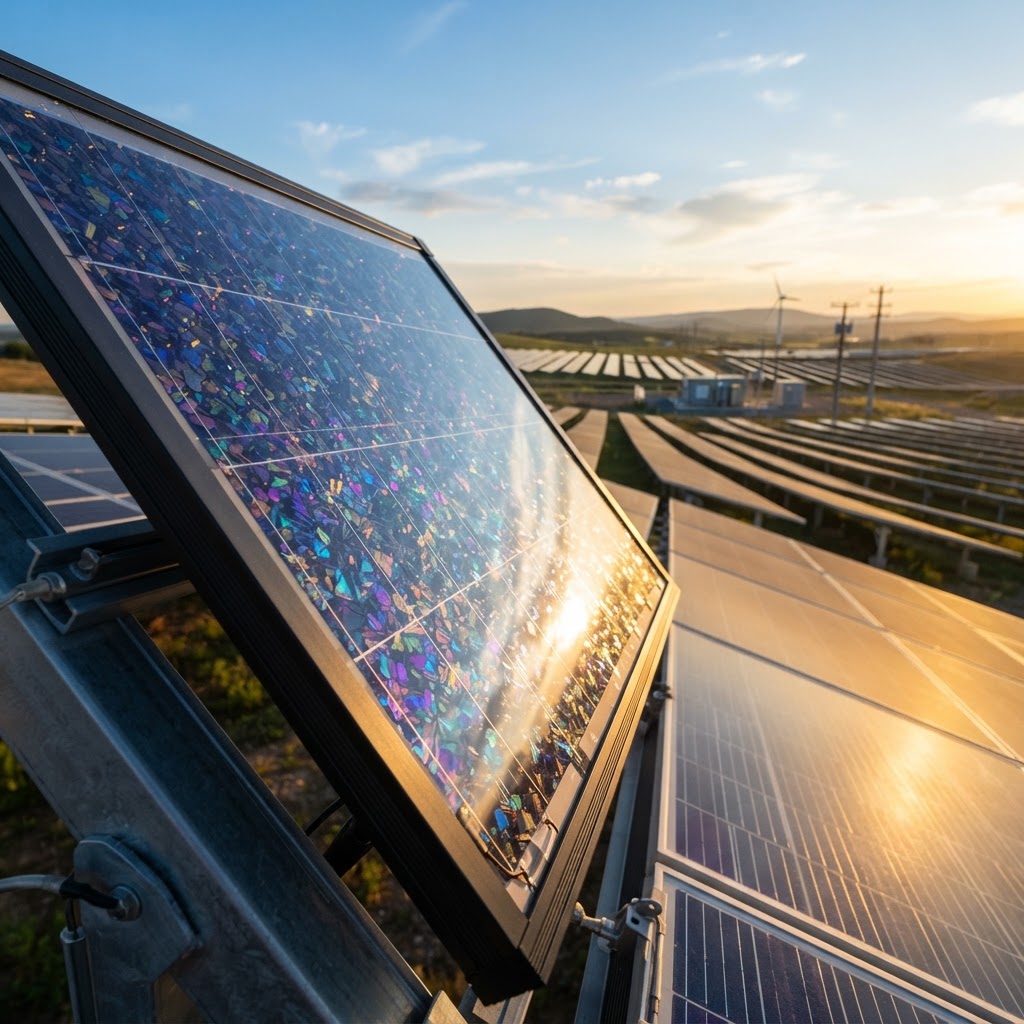
The numbers back her up. In early 2026, researchers shattered the previous efficiency ceiling, achieving a world-record 12.3% power conversion efficiency for transparent solar windows while maintaining 30% visible light transparency — a combination that finally makes the technology commercially credible across a range of building types. For context, next-generation solar vision glass from leading manufacturers now delivers 66% more energy output per square meter compared to 2024 models, according to PV Magazine. That is not incremental progress; that is a technology hitting its stride.
The market is responding accordingly. The global solar photovoltaic glass market is projected to reach $35.7 billion in valuation by end of 2026, with total market volume estimated at 32.24 million tons and a CAGR of 18.42% projected through 2031. The narrower transparent solar glass segment alone is on a trajectory to reach $15 billion by 2035, maintaining a 21.1% annual growth rate.
The Breakthroughs Driving 2026's Momentum
Several distinct technological threads have converged this year to produce a genuine inflection point.
Organic Photovoltaics at Commercial Scale
In January 2026, NEXT Energy Technologies achieved something the industry had been chasing for a decade: scaling organic photovoltaic (OPV) window production to 40 inches by 60 inches — the largest panels of their kind ever manufactured. This is not a laboratory curiosity. Panels at that size integrate directly into standard commercial glazing systems, removing the custom-fabrication cost premium that previously made BIPV economics painful for developers.
Harvesting Light from Every Source
A UCL-led international research team unveiled semi-transparent solar cells in July 2026 capable of harvesting energy from both indoor ambient light and direct sunlight. This dual-mode capability is a significant leap. Most rooftop solar panels are essentially useless on overcast days or in interior-facing applications. These cells maintain meaningful output under low-light indoor conditions, opening pathways for continuous power generation for building management systems, sensors, and IoT devices — essentially enabling a 24-hour energy harvest from a single glazing unit.
Liquid Crystal Light Redirection
In September 2025, scientists debuted a transparent solar coating using cholesteric liquid crystal layers that selectively redirect polarized light to the edges of a window, where photovoltaic collectors capture it. This edge-collection architecture means the active solar components are largely invisible to the building occupant — a critical aesthetic advantage for architects and a key reason commercial adoption is accelerating.
Selective Spectrum Harvesting
The most commercially mature designs now exploit tandem organic and perovskite cell architectures that capture energy from the infrared and ultraviolet spectrums while leaving the visible light spectrum largely undisturbed. This is the core of what makes "transparent" solar glass actually transparent — you are not sacrificing the view to generate power, you are capturing the wavelengths human eyes cannot perceive anyway.
The Economics Have Fundamentally Flipped
Here is where the story gets genuinely disruptive for developers, building owners, and eventually homeowners: the financial logic of transparent solar glass no longer depends on energy generation alone.
Marcus Thorne, Chief Sustainability Officer at Global Heights Architecture, frames it bluntly: "The economics of BIPV have flipped. When you factor in carbon credits and the 40% reduction in cooling loads, not installing solar glass on a new 50-story tower is becoming a fiduciary risk."
That framing — fiduciary risk — is the signal that a technology has crossed from visionary to mainstream. Here is why the math is working now:
- TCO Arbitrage: High-performance curtain wall systems on commercial towers already cost $80–$150 per square foot installed. When transparent solar glass replaces that cost rather than adding to it, the incremental cost of electricity generation approaches zero. The glass was going in anyway.
- HVAC Load Reduction: By selectively filtering infrared radiation, solar glass can reduce cooling loads by up to 40%. In California's climate zones — where air conditioning drives significant peak demand charges under SCE and other utility rate structures — this translates to meaningful annual savings on energy bills.
- Carbon Credits and Compliance: California's Title 24 energy codes are tightening continuously. Buildings that integrate BIPV gain a measurable compliance advantage, and carbon credit markets increasingly value documented on-site renewable generation.
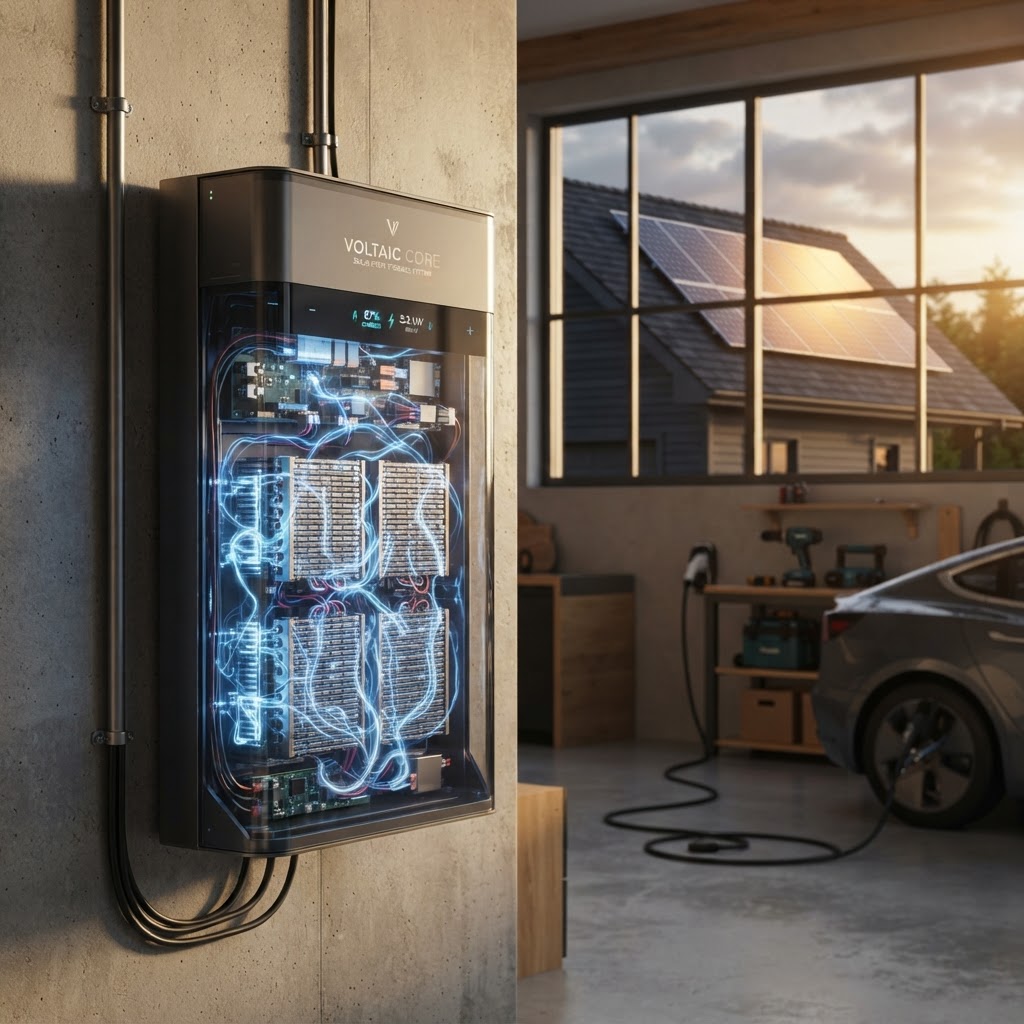
- Grid Independence Value: Under NEM 3.0, the calculus for California solar has shifted toward self-consumption and storage. Transparent solar glass that feeds a battery system directly — rather than exporting to the grid at reduced rates — fits precisely into the nano-grid philosophy that serious energy planners are now recommending for both commercial and residential projects.
Vertical Solar Farming: The Skyscraper as Power Plant
One of the most consequential trend shifts of 2026 is the emergence of what planners are calling vertical solar farming — the systematic conversion of skyscraper facades into distributed generation assets.
Urban cores have a fundamental problem with traditional rooftop solar: there is not enough roof area relative to the energy demands of the buildings below. A 50-story tower in downtown Los Angeles has a rooftop footprint of perhaps 20,000 square feet. Its south-, east-, and west-facing glass facade might represent 400,000 square feet of solar-exposed surface area. At 12% efficiency and reasonable California irradiance figures, that facade could theoretically generate megawatts of power that rooftop panels never could.
SolarWindow Technologies CEO Amit Singh outlined a commercialization strategy in August 2026 targeting 85 million US buildings as the addressable market for see-through electricity-generating windows. That number is not a rounding error — it represents a fundamental reframing of where solar capacity can be deployed, extending well beyond open land and suburban rooftops into the densest urban environments in the country.
What This Means for California Specifically
California sits at an unusual intersection of factors that make it one of the most important markets for BIPV glass adoption:
- Solar irradiance: California's climate zones offer among the highest annual irradiance levels in the continental US, maximizing the output potential of any solar surface — vertical or horizontal.
- NEM 3.0 pressure: The shift away from favorable export rates under NEM 3.0 rewards systems designed for maximum self-consumption. Transparent solar glass feeding an on-site battery perfectly mirrors this incentive structure.
- SGIP incentives: California's Self-Generation Incentive Program continues to support battery storage systems. A BIPV-plus-storage configuration may qualify for SGIP rebates depending on system design and utility territory — a nuance that requires hyperlocal financial modeling to evaluate accurately.
- Title 24 and building codes: California's energy codes already require meaningful efficiency standards for new construction and major renovations. BIPV glass can directly contribute to Title 24 compliance in ways that make it attractive not just as an energy asset but as a permitting tool.
- Commercial real estate pressure: California has some of the most aggressive municipal carbon neutrality targets in the country. Building owners in Los Angeles, San Francisco, and San Jose face increasing regulatory and investor pressure to decarbonize their portfolios — and vertical solar integration is an increasingly viable path.
Residential Applications: Closer Than You Think
While much of the current commercial momentum is in large-scale commercial and institutional projects, the residential application pipeline is real. Skylights, south-facing window walls, sunrooms, and attached greenhouses are all near-term candidates for transparent solar glass integration.
For California homeowners, the key considerations include:
- Shade and orientation analysis: Even on vertical surfaces, satellite-based irradiance modeling can identify which glazed surfaces will generate meaningful output versus minimal return.
- Utility territory specifics: Whether you are served by SCE, PG&E, SDG&E, or a community choice aggregator like BWP, the rate structure dramatically affects which BIPV configurations deliver the best financial return.
- Battery integration: Given NEM 3.0's reduced export incentives, pairing any BIPV installation with properly sized storage is increasingly the financially rational choice — and the foundation of genuine home energy resilience.
Bottom Line
Transparent solar glass in 2026 is not a prototype, a press release, or a distant promise — it is a commercially available, rapidly scaling technology that has simultaneously crossed efficiency thresholds, cracked the manufacturing scale challenge, and rewritten its own economic justification. The question for California homeowners and commercial developers is no longer whether this technology works; it is how to evaluate it rigorously, model it accurately against your specific utility rates and building geometry, and integrate it with storage in a way that actually delivers resilience and return.
Independent, conflict-free guidance — the kind that starts with your actual roof geometry, your utility territory, and your financial goals rather than a manufacturer's spec sheet — is exactly how you make that call correctly. Get your free solar assessment from Solanano today and find out how emerging solar technologies, from BIPV glass to battery storage, fit into your home energy future.