Perovskite Solar Cells: The Technology About to Disrupt the Solar Industry
Published by Solanano | Solar Engineering Insights | Updated July 2026
Key Takeaways
- Perovskite-silicon tandem cells have hit 34.8% certified efficiency in lab settings — nearly double that of conventional residential panels
- Oxford PV began shipping the first commercial 30%-efficiency tandem modules for residential rooftops in July 2026
- Manufacturing costs for perovskite layers have collapsed to $0.08 per watt, signaling a price disruption on the horizon
- The global perovskite market surged 140% year-over-year to $1.2 billion in Q1 2026 alone
- California homeowners planning solar installations today should understand how this technology will reshape system sizing, ROI, and battery pairing within the next 24–36 months
Why Perovskites Are No Longer a "Lab Story"
For most of the past decade, perovskite solar cells lived comfortably in research papers and conference keynotes — always "three to five years away" from commercial relevance. That narrative is now obsolete.
In July 2026, Oxford PV began shipping its flagship 72-cell tandem modules to residential customers, delivering a certified 30% power conversion efficiency and a 20% increase in energy yield compared to the best conventional TOPCon panels currently on the market. This is not a pilot program. This is a product you can put on a roof.
The shift from laboratory curiosity to commercial reality has been swift, and the numbers backing it up are hard to ignore. The global perovskite solar cell market reached $1.2 billion in Q1 2026, a staggering 140% year-over-year increase, according to GlobalData's Solar Insights Report. Meanwhile, over 15 GW of perovskite-silicon tandem production capacity is currently under construction across China, the EU, and the United States, per Wood Mackenzie's PV Manufacturing Tracker.
For California homeowners navigating NEM 3.0's time-of-use economics — where every additional kilowatt-hour of self-generation carries real financial weight — this technology shift matters more than it might seem.
What Makes Perovskite Different (and Potentially Better)
Perovskite refers to a class of crystalline materials with a specific ABX₃ atomic structure that is extraordinarily efficient at absorbing sunlight. Unlike silicon, which requires energy-intensive, high-temperature manufacturing, perovskite layers can be deposited using roll-to-roll printing processes — think of it like printing a newspaper, but the ink converts sunlight into electricity.
That manufacturing simplicity has driven costs down to $0.08 per watt for the perovskite layer alone as of May 2026, according to IRENA's Cost Analysis. Compare that to the full-system installed costs California homeowners are currently paying, and you start to see why the industry is paying close attention.
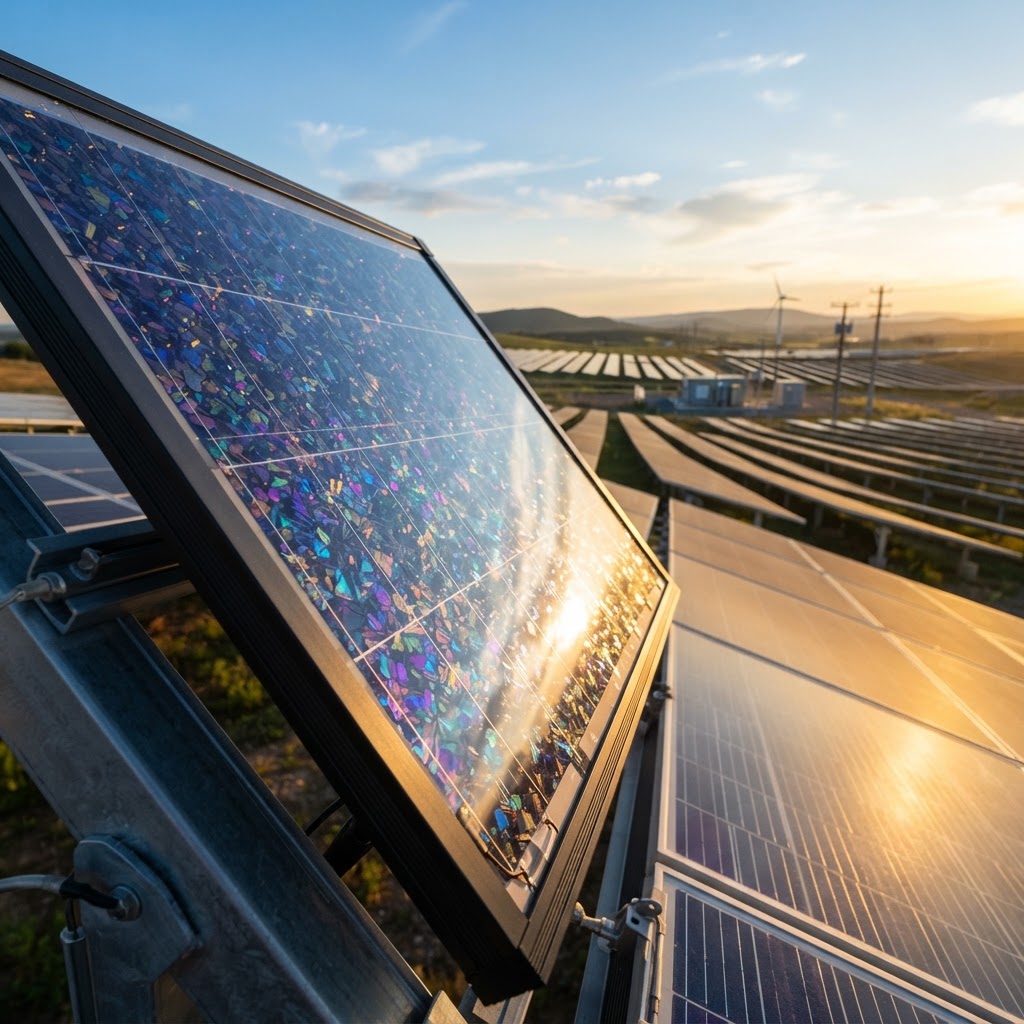
The real power, however, comes from tandem architecture. Rather than replacing silicon, the most commercially viable perovskite products layer a perovskite cell on top of a silicon cell. Each layer captures a different part of the solar spectrum — perovskite absorbs high-energy photons while silicon captures lower-energy ones. The result is a tandem cell that has achieved a certified 34.8% power conversion efficiency in laboratory settings, according to NREL's Best Research-Cell Efficiency Chart (updated June 2026). For reference, premium residential silicon panels today typically operate between 20% and 23%.
The Stability Problem: Considered Solved
The single biggest objection to perovskites has always been durability. Early cells degraded rapidly when exposed to moisture, heat, and UV light — the exact conditions a rooftop solar panel faces every day.
That concern is fading fast.
"The 'stability gap' that plagued perovskites for a decade is effectively closed. We are now seeing modules that can withstand desert heat and humid coastal air as reliably as crystalline silicon," says Dr. Elena Vance, Chief Technology Officer at HelioLabs.
The data supports her confidence. Encapsulated perovskite modules tested by the Fraunhofer Institute for Solar Energy Systems successfully passed the IEC 61215 accelerated aging protocol — the same standard used to qualify conventional silicon panels — maintaining 92% of initial efficiency after 2,500 hours. That is a meaningful durability benchmark, and it addresses the warranty and longevity questions that any responsible homeowner or solar advisor should be asking.
For California specifically, where rooftop systems face the dual stress of intense Central Valley heat and coastal marine layer humidity, this is a critical development. A panel that survives both environments reliably changes the long-term financial modeling considerably.
The Lead Question: Environmental Concerns and Where Research Stands
One legitimate concern that deserves honest treatment: most high-efficiency perovskites currently use lead as a key component. Lead is toxic, and questions about what happens when millions of panels eventually reach end-of-life are fair ones.
Researchers are actively working on alternatives. In January 2026, a team at MIT achieved 18% efficiency with tin-based, lead-free perovskite cells — a historic milestone that demonstrated stabilized performance for the first time without the toxicity trade-off. While tin-based cells are not yet competitive with their lead-based counterparts at 30%+, the efficiency gap is closing, and the research trajectory is encouraging.
In parallel, manufacturers are responding to tightening EU environmental regulations for 2027 by transitioning toward green solvent processing — replacing toxic deposition chemicals with eco-friendly alternatives. California's own regulatory environment, never shy about chemical restrictions, will likely accelerate adoption of these cleaner processes domestically.
This is a space worth watching. It is not a reason to delay solar decisions today, but it is a factor that will shape which manufacturers earn long-term credibility.
Key Trends Shaping the Perovskite Roadmap
Beyond efficiency numbers and durability tests, several broader trends are converging to define what perovskite's commercial future looks like:
-
Tandem dominance: The industry has largely moved past "perovskite-only" cell concepts. The commercial bet is on perovskite-silicon tandems as the direct successor to premium n-type silicon. "By 2028, we expect perovskite-silicon tandems to become the new 'Gold Standard.' Any manufacturer not currently investing in a perovskite roadmap is essentially planning their exit from the market," says Marcus Thorne, Senior Energy Analyst at BloombergNEF.
-
BIPV expansion: Semi-transparent perovskite coatings are being integrated into commercial skyscraper glass, turning building facades into distributed generation assets. For California's dense urban centers and large commercial building stock, this has significant long-term implications for grid load profiles.
-
Scale proven in China: In May 2026, GCL Perovskite completed the world's first 2 GW continuous production line in Kunshan — the first facility to prove that large-area (2m²) perovskite glass can be manufactured with uniform efficiency above 19% at industrial scale. Volume manufacturing is no longer theoretical.
-
AI-accelerated material discovery: Machine learning algorithms are now simulating over 100,000 ionic combinations per month to find more stable and heat-resistant perovskite crystal structures. The pace of discovery has fundamentally changed.
-
Mobility integration: In March 2026, Toyota and Panasonic integrated flexible perovskite film into a 2027 EV prototype roof, generating an estimated 15–20 miles of additional range per day from ambient sunlight. The technology is migrating beyond rooftops entirely.
What This Means for California Homeowners Considering Solar Now
The most practical question: should you wait for perovskite panels before going solar?
At Solanano, our independent analysis suggests no — for most California homeowners, waiting is the wrong financial decision. Here is why:
NEM 3.0 clock is ticking. California's current net metering structure rewards self-consumption, and every month without solar is a month of utility bills that a properly designed system could offset. The financial model Solanano builds for each client uses hyperlocal satellite irradiance data and NEM 3.0-aware cash flow projections — and in most SCE, PG&E, and BWP service territories, the numbers favor acting now.
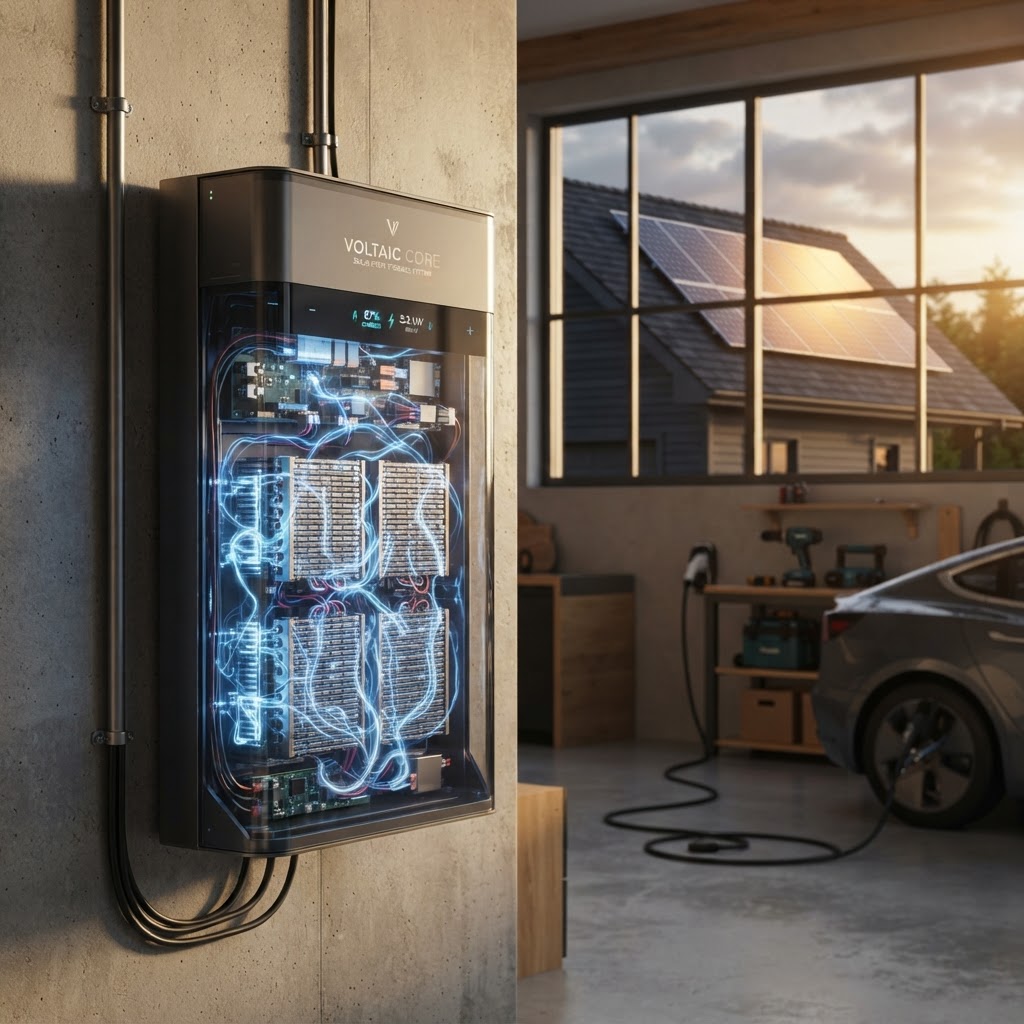
Today's best silicon panels are excellent. Premium TOPCon and HJT panels from tier-one manufacturers deliver real-world performance in the 21–23% efficiency range with 25-year warranties. Combined with a battery storage system — the core of what we call the nano-grid approach — today's technology already delivers meaningful energy independence.
Perovskite will raise the ceiling, not lower today's floor. When high-volume tandem panels become widely available to residential customers — likely 2027 to 2029 for mainstream pricing — they will primarily benefit homeowners with constrained roof space who need to maximize watts per square foot. If your roof can already accommodate an adequately sized silicon system, the urgency diminishes.
Installer quality matters more than panel technology. A 30%-efficient panel installed by an unqualified contractor is worth less than a 21%-efficient panel installed by a certified professional with a clean track record. Solanano's 4-stage vetting process — covering licensing, insurance, NABCEP certification, and performance scoring — exists precisely because the technology is only as good as the team deploying it.
Bottom Line
Perovskite solar cells have crossed from scientific promise into commercial reality faster than most of the industry anticipated. With certified efficiencies approaching 35%, manufacturing costs plummeting, durability benchmarks being cleared, and Oxford PV already shipping 30%-efficiency tandem modules to residential customers, the disruption is not coming — it has arrived. California homeowners who understand this technology shift will make smarter decisions about system sizing, equipment selection, and long-term upgrade paths. The smartest move right now is not to wait for the next wave, but to build your solar and battery foundation with the best available technology today while keeping your upgrade strategy informed by what is coming.
Ready to understand exactly what solar and battery storage makes financial sense for your California home — with full NEM 3.0 modeling, shade analysis, and access to pre-vetted, NABCEP-certified installers? Get your free solar assessment from Solanano today.