Solar Skin Technology: Panels That Look Like Your Roof Material
Key Takeaways
- Solar skin technology (also called BIPV) turns roofing, facades, and walls into invisible power generators that mimic traditional building materials.
- The global BIPV market is projected to reach $32.61 billion by 2026, growing at roughly 20% CAGR.
- New aesthetic solar tiles in 2025–2026 achieve cell conversion efficiencies of up to 25%, matching high-end conventional panels.
- Advanced light-selective coatings now preserve up to 95% of standard power output while replicating slate, terracotta, asphalt, and masonry textures.
- Heritage preservation zones, HOA-restricted neighborhoods, and luxury residential markets are the fastest-growing adoption drivers.
For decades, one of the most common objections to rooftop solar has had nothing to do with cost or performance — it has been about appearances. Dark blue rectangular panels mounted on standoffs look unmistakably industrial, and for homeowners in historic districts, premium developments, or simply households with strong aesthetic sensibilities, that visual compromise was a dealbreaker. In 2025 and 2026, that objection has been systematically dismantled.
Solar skin technology — the broad category of building-integrated photovoltaics (BIPV) designed to replicate conventional roofing and cladding materials — has crossed a critical threshold. It is no longer a niche architectural curiosity. It is a rapidly maturing, commercially available product category reshaping how we think about both home design and distributed energy generation.
What Exactly Is Solar Skin Technology?
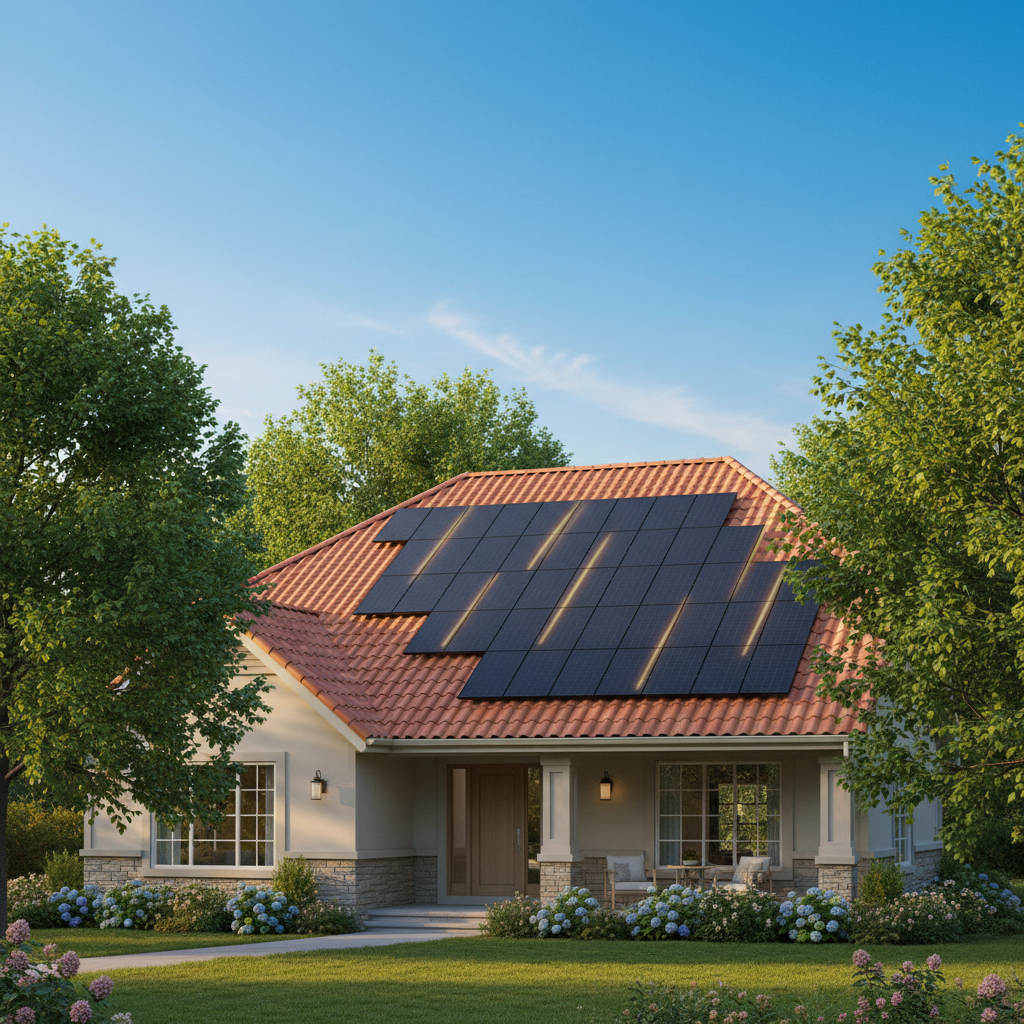
Solar skin is a collective term for photovoltaic systems engineered to be visually indistinguishable from standard building materials. Unlike rack-mounted panels bolted above a roof surface, solar skins are the roof surface — or the wall, the facade, the dormer, the canopy. The photovoltaic layer is embedded within or printed onto materials that replicate:
- Asphalt shingles (the most common US residential roofing material)
- Terracotta and clay tiles (dominant in Mediterranean and southwestern US architecture)
- Slate and stone-look panels
- Standing-seam metal roofing
- Brick, masonry, and glass facades
The underlying science relies on thin-film photovoltaic cells, light-selective coatings, and — increasingly — high-definition surface printing technologies that recreate the granular texture and natural patina of traditional materials at near-perfect resolution.
The Market Opportunity Is Enormous
The numbers behind solar skin adoption tell a compelling story. The global BIPV market is estimated to reach $32.61 billion by late 2026, expanding at a compound annual growth rate of approximately 20%. That trajectory reflects a convergence of falling manufacturing costs, rising energy prices, tightening building codes, and a consumer base that is increasingly unwilling to accept aesthetic trade-offs for sustainability.
Residential applications are anticipated to account for 41.3% of all solar skin installations by 2026, as homeowners pursue energy independence without the "industrial" visual footprint of traditional panels. Meanwhile, thin-film solar skins — the most flexible and visually adaptable format — are projected to dominate the BIPV technology segment with a 40.2% market share by the same year.
As Senior Renewable Energy Analyst Sarah Jennings at Research Nester puts it: "By 2026, the 'aesthetic gap' has effectively closed. Homeowners no longer have to choose between a beautiful home and a sustainable one; the building material itself has become the generator."
2025–2026 Product Launches Redefining the Category
Several landmark product introductions have accelerated mainstream awareness of solar skin technology:
Jackery Solar Roof (CES 2025)
In January 2025, Jackery debuted its Solar Roof at CES, featuring curved terracotta and obsidian tile options engineered to be visually indistinguishable from standard roofing materials. The product achieved cell conversion efficiency ratings of up to 25% — a figure that rivals high-end conventional monocrystalline panels and definitively answers the long-standing concern that beautiful solar must mean compromised performance.
Tesla Energy and First Solar Joint Initiative (May 2025)
In May 2025, Tesla Energy and First Solar announced a joint initiative to produce ultra-lightweight thin-film BIPV panels designed for dual deployment on glass facades and sloped residential roofs. This partnership brings together Tesla's brand recognition in the residential solar space with First Solar's advanced thin-film manufacturing expertise — a combination that signals serious industrial commitment to the BIPV category.
Fraunhofer ISE's ShadeCut Technology (April 2026)
Perhaps the most significant technical breakthrough came in April 2026, when Germany's Fraunhofer Institute for Solar Energy Systems revealed ShadeCut — a specialized film technology that allows solar panels to convincingly replicate masonry, roof tiles, and even custom architectural patterns. The technology is specifically designed for deployment in historical preservation zones, where conventional panels have long been prohibited.
Dr. Martin Heinrich, Head of Photovoltaics Integration at Fraunhofer ISE, described the technology's scope directly: "Modules with ShadeCut can look like masonry or roof tiles and blend in perfectly in terms of color. It also allows for the customization of PV systems with patterns or lettering without detracting from architectural appearance."
The Science Behind the Aesthetics
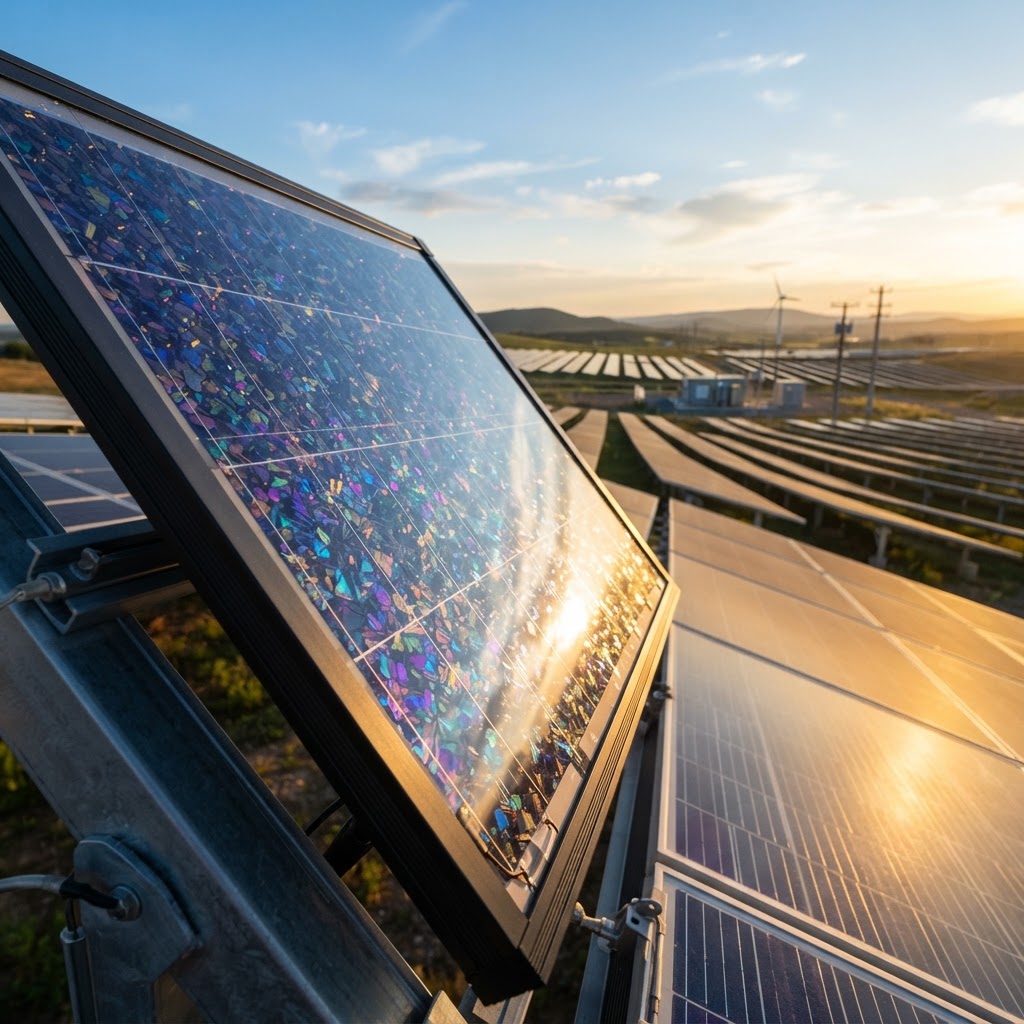
How do solar skins maintain power output while looking like something entirely different? The answer lies in advanced light-selective coatings — optical filters applied to the panel surface that are designed to transmit solar wavelengths most useful for energy generation while reflecting the visible-light wavelengths that create the desired surface appearance to the human eye.
The results are striking: these coatings allow solar skins to maintain up to 95% of standard power output compared to uncoated conventional panels. That five-percentage-point efficiency trade-off, in exchange for complete visual integration with a building's architecture, represents an engineering achievement that was considered implausible just five years ago.
Key Trends Driving Adoption in 2026 and Beyond
The solar skin market is not standing still. Several interconnected trends are accelerating its evolution and broadening its addressable market:
1. Hyper-Realism in Surface Texture
Early aesthetic solar products competed on color matching. The current generation competes on texture. Manufacturers are now engineering surfaces that replicate the granular roughness of asphalt shingles, the layered grain of cedar shakes, and the weathered patina of aged slate — tactile qualities that make visual identification nearly impossible even at close range.
2. Facade-Integrated Generation
Solar skin is rapidly expanding beyond rooftops into full building envelope systems. Commercial architects are integrating energy-harvesting surfaces into glass curtain walls, spandrel panels, and opaque cladding systems — effectively turning entire skyscrapers into distributed power plants. This "energy-harvesting building envelope" concept represents the next major frontier for BIPV.
3. AI-Powered Aesthetic Optimization
Emerging systems use machine learning algorithms to dynamically adjust the optical properties of solar skin surfaces in real time, optimizing light absorption based on sun angle, cloud cover, and seasonal position — without any visible change to the surface appearance. This active optimization layer could push effective efficiency ratings significantly higher in the coming years.
4. Heritage-First Retrofitting
The approval of ShadeCut-style technologies for use in historical preservation zones is opening a previously locked market. European and North American historic districts — where conventional panels have been prohibited by preservation boards for decades — are now beginning to permit custom-printed solar overlays that satisfy both energy goals and heritage protection standards. This is a paradigm shift for millions of properties previously excluded from solar adoption.
The HOA Problem — Solved
One of the most practical near-term impacts of solar skin technology is its direct effect on homeowners association restrictions. HOAs have long restricted or outright banned rooftop solar installations in premium and planned communities, citing visual uniformity standards. In March 2026, several major US West Coast homebuilders began mandating aesthetic solar options for new premium developments specifically to preempt HOA objections — essentially building solar compliance into the architecture from day one.
This development matters enormously for market scale. Millions of US homes sit in HOA-governed communities. Solar skin technology doesn't just give those homeowners an option — it removes the barrier entirely.
What Solar Skin Technology Costs Today
Solar skin products carry a price premium over conventional rack-mounted systems, reflecting their advanced manufacturing requirements. Current installed costs for premium BIPV products typically run 15% to 40% higher than equivalent conventional solar installations on a per-watt basis, depending on the material type and customization level. However, several factors partially offset this premium:
- Elimination of separate roofing costs when solar skin replaces a scheduled roof replacement
- Higher home resale values in aesthetically sensitive markets
- Access to premium-market and heritage-district installations where conventional solar is not permitted
- Increasing manufacturing scale driving cost reductions throughout 2025–2026
The Bottom Line
Solar skin technology has moved decisively from architectural novelty to a credible, high-performance alternative to conventional rooftop solar — and in certain markets, it is already the preferred choice. With efficiency ratings matching the best traditional panels, surface realism that fools the eye at arm's length, and newly unlocked markets in historic districts and HOA communities, the case for BIPV is stronger than it has ever been. The $32.61 billion market projection for 2026 is not hype; it reflects real demand from homeowners, developers, and urban planners who have been waiting for exactly this convergence of performance and aesthetics. The era of choosing between a beautiful home and a solar-powered one is over.
Ready to find out whether solar skin technology is right for your home and your roof type? Get a free solar proposal today and discover your personalized savings estimate from a certified local installer.