NEM 3.0 Battery Storage Strategy: How to Maximize Savings in 2026
Key Takeaways
- Under NEM 3.0, solar-plus-storage systems achieve payback in 7–9 years versus 10–14 years for solar-only — battery storage is no longer optional, it's the financial engine.
- Summer evening export rates can spike to $3.00/kWh between 6–8 PM, creating arbitrage windows that sophisticated battery software is now designed to capture automatically.
- California's battery attachment rate has surged to 70% of new solar installations in early 2026, up from just 11% before NEM 3.0 — the market has already voted.
- Virtual Power Plant (VPP) programs, SGIP rebates, and new utility incentives like SMUD's $5,400 enrollment bonus can dramatically improve your system's return on investment.
- An independent advisor — not your installer — should model your specific utility, rate schedule, and load profile before you sign anything.
Why Battery Storage Is No Longer Optional Under NEM 3.0
When the California Public Utilities Commission finalized the Net Billing Tariff (commonly called NEM 3.0) in 2023, it fundamentally rewired the economics of residential solar. The old model — export as much as you generate, bank credits at retail rates — is gone. In its place is a dynamic, time-sensitive compensation structure where the value of exported energy varies by as much as 6,000% depending on the hour of the day.
That's not a typo. Under the 2026 Avoided Cost Calculator (ACC), midday solar exports earn roughly $0.05/kWh — barely enough to register — while summer evening exports between 6 PM and 8 PM can clear $3.00/kWh according to SCE's 2026 Solar Billing Plan Schedules. The math is unambiguous: a kilowatt-hour exported at noon is nearly worthless. The same kilowatt-hour dispatched at 7 PM in September is worth sixty times as much.
A battery doesn't just store energy. Under NEM 3.0, it stores value.
This reality is reflected in the numbers. By early 2026, California's battery attachment rate for new solar installations reached 70%, up from 11% before the NEM 3.0 transition, according to the CPUC's 2025 Annual Progress Report. Installers, homeowners, and financiers have all recalibrated. The question in 2026 is no longer whether to add battery storage — it's how to deploy it strategically.
Understanding the 2026 Rate Environment: What You're Actually Arbitraging
Before designing a battery strategy, you need to understand the rate landscape your system will operate in. California's utility environment in 2026 is more complex — and more opportunity-rich — than it's ever been.
Key rate dynamics to know:
- Time-of-Use (TOU) on-peak hours under SCE, PG&E, and SDG&E typically run from 4 PM to 9 PM on weekdays, with the highest export premiums concentrated in the 6–8 PM window during summer months (June–September).
- PG&E's new Income-Graduated Fixed Base Service Charge, which took effect January 1, 2026, adds a mandatory $24/month base fee. This shifts more of your electricity cost into fixed territory, making battery-driven peak avoidance even more valuable for reducing variable charges.
- SMUD customers have a particularly attractive option: the Sacramento Municipal Utility District extended its My Energy Optimizer upfront battery rebate to $5,400 in March 2026 — currently the highest upfront incentive in California — for customers who enroll in its grid-support program.
- California Supreme Court NEM 3.0 Ruling: A final ruling on export rate calculations is expected by late summer 2026, following an August 2025 order to reconsider parts of the Net Billing Tariff. Any homeowner signing a solar contract today should understand that export rate structures could shift, making battery flexibility — rather than fixed export schedules — the most durable strategy.
The bottom line: your battery's financial performance is inseparable from your specific utility, rate schedule, and zip code. Hyperlocal modeling isn't a luxury — it's a prerequisite.
The Strategic Battery Playbook for 2026
1. Size for Peak Export Windows, Not Just Self-Consumption
The old "self-consumption" battery strategy — charge during the day, discharge at night to avoid buying power — is increasingly leaving money on the table. In 2026, the more sophisticated approach is export arbitrage: holding charge specifically to export during the highest-value windows of the day.
"In 2026, the grid doesn't care about your solar generation; it cares about your battery's flexibility. The real winners of NEM 3.0 are those using automated arbitrage to hit the $3.00/kWh windows in September." — Dr. Aris Thorne, Director of Grid Strategy, Western Energy Partners
This reframes how you should size your system. A battery sized purely for overnight self-consumption might be 10–13 kWh. A battery sized to capture peak export events in September and October — when California's grid stress is highest and ACC rates peak — may warrant 20–27 kWh of usable capacity or a multi-battery configuration.
2. Demand AI-Driven Optimization Software
"Set it and forget it" battery modes are obsolete. In 2026, AI-driven export arbitrage software is the single highest-value upgrade available to battery owners. These platforms — offered by inverter manufacturers, third-party apps, and increasingly as VPP enrollment benefits — analyze day-ahead energy prices, weather forecasts, grid signals, and your household load to determine the optimal charge/discharge schedule for every 15-minute interval.
The performance difference is significant. Compared to static Self-Consumption mode, AI optimization has been shown to roughly double the value of energy exported to the grid by consistently hitting high-rate windows rather than exporting opportunistically. Ask any installer or advisor you work with: if they can't demonstrate AI dispatch capability in their proposed system, that's a red flag in 2026.
3. Evaluate VPP Enrollment Seriously
Virtual Power Plants have graduated from pilot programs to mainstream financial instruments. Sunrun's CalReady VPP reached 425 MW of dispatchable capacity across more than 80,000 enrolled households by July 2026, according to Sunrun's Q2 2026 Investor Disclosure. That scale means meaningful grid-service payments are flowing to homeowners.
New entrants like Lunar Energy and Palmetto now offer VPP-as-a-Subscription models: no upfront battery cost in exchange for a share of annual grid-service revenue. For homeowners who are cash-constrained or skeptical of long payback periods, these structures can make the economics immediate.
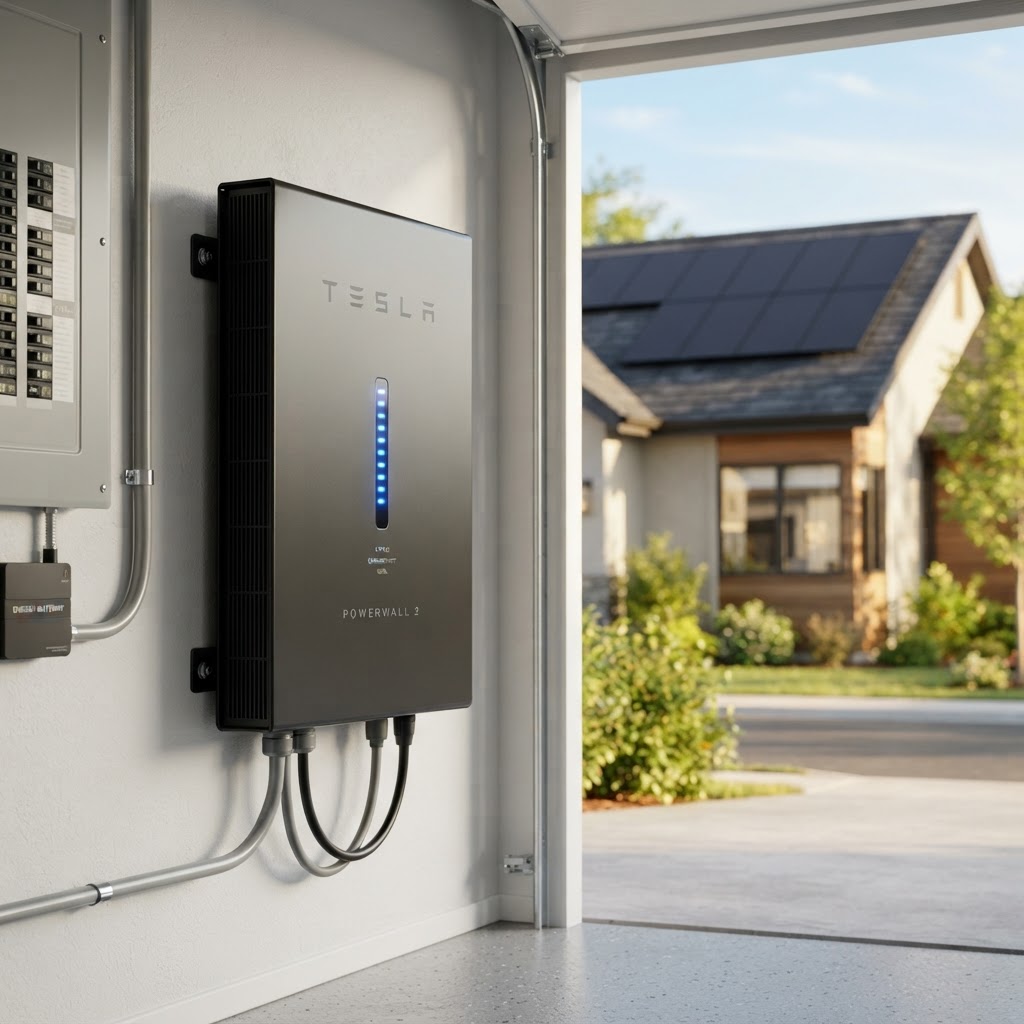
"We've seen a shift from 'green energy' to 'energy revenue.' Homeowners are now treating their Tesla Powerwall 3s like high-yield savings accounts, specifically sizing systems to capture the highest VPP event payments." — Sarah Jenkins, Chief Economist, SolarROI Analytics
Before enrolling in any VPP program, read the dispatch agreement carefully. Some programs reserve the right to dispatch your battery during hours that conflict with your own peak export strategy. An independent advisor can help you evaluate whether a specific VPP contract adds or subtracts value for your particular load profile.
4. Stack Every Available Incentive
California's incentive stack in 2026 is genuinely powerful — but fragmented. A complete strategy should evaluate:
- Federal 30% Investment Tax Credit (ITC): Applies to both solar and battery storage when the battery is charged from solar at least 70% of the time.
- SGIP (Self-Generation Incentive Program): California's statewide battery rebate, with enhanced incentives for low-income households and high-fire-risk zones. Check current reservation availability with your utility.
- SMUD $5,400 My Energy Optimizer Rebate: For Sacramento-area customers only, but currently the most aggressive upfront incentive in the state.
- Prepaid Lease Structures: A resurgent financing model that allows homeowners to access the 30% federal commercial ITC value indirectly through the developer — worth evaluating if upfront capital is a constraint.
- Utility-specific demand response programs: SCE, PG&E, and BWP each offer battery-specific enrollment bonuses and bill credits that compound on top of NEM 3.0 export earnings.
Stacking these correctly requires knowing your utility territory, income bracket, and system configuration simultaneously. It's not something a general-purpose solar quote tool can handle accurately.
The Nano-Grid Perspective: Resilience as a Return
Beyond the financial calculus, there's a resilience dimension to battery storage that California homeowners increasingly factor into their decisions — and rightly so. The 2025–2026 grid buildout has been dramatic: CAISO reached 15.7 GW / 59.6 GWh of installed battery storage capacity by end of 2025, with a record 4.7 GW added in a single year according to the Modo Energy 2026 BESS Index. Utility-scale projects like the new 672 MW Sanborn Hybrid 3 facility in Kern County — which came online in June 2026 — provide critical evening peak relief. But the grid is still vulnerable to wildfire-driven shutoffs, extreme heat events, and transmission constraints.
A properly designed solar-plus-storage system — what we at Solanano call a nano-grid — gives your home genuine energy independence during grid outages, not just bill savings during normal operations. Sizing for resilience often aligns neatly with sizing for peak export arbitrage: both require adequate storage capacity and intelligent dispatch. The two goals reinforce each other.
Bottom Line
NEM 3.0 has turned California residential energy into a genuine arbitrage market, and in 2026, the homeowners winning that market are those who treat their battery storage as a precision financial instrument — properly sized, AI-dispatched, VPP-enrolled, and incentive-stacked for their specific utility territory. The 7–9 year payback period for solar-plus-storage is achievable, but it requires getting the strategy right from day one, not retrofitting a better plan onto a system that was designed for a world that no longer exists.
The difference between a system that pays back in 7 years and one that takes 14 often comes down to a single decision: who modeled your system before you signed.
Ready to see what a properly optimized NEM 3.0 battery strategy looks like for your home and utility? Get a free, independent solar assessment from Solanano — no installer commissions, no equipment sales, just the honest numbers for your specific situation.


