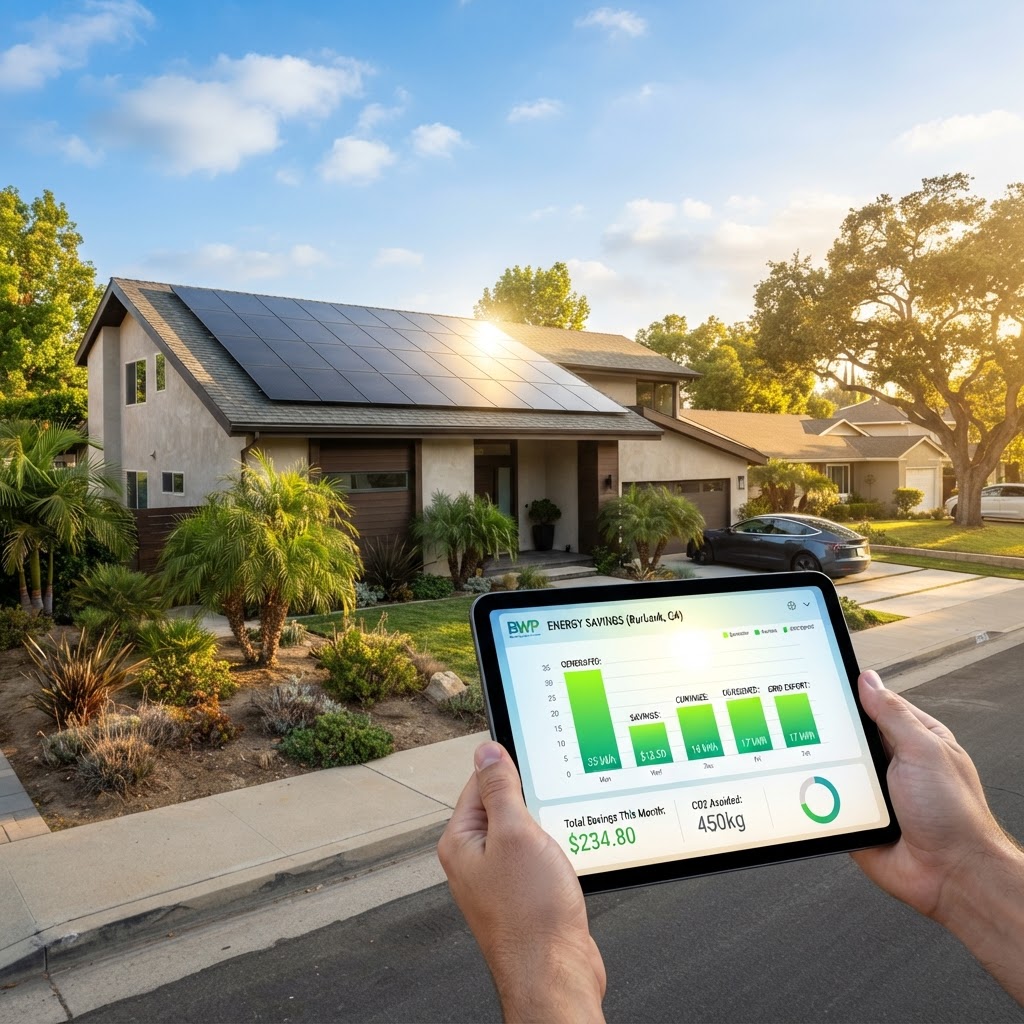
What Is a Solar Nanogrid? The Home Energy Strategy California Is Missing
Key Takeaways
- A solar nanogrid tightly integrates rooftop solar, battery storage, and smart loads into a self-sufficient home energy system — far more capable than a standard solar installation.
- California homeowners face a unique combination of NEM 3.0 economics, wildfire risk, and utility rate volatility that makes the nanogrid approach not just smart, but increasingly essential.
- New research shows DC-coupled nanogrids can eliminate up to 9.2% of daily electricity waste compared to conventional solar setups.
- California has surpassed 2 million solar homes and 250,000 solar batteries — yet most of those systems aren't configured to deliver true energy independence.
- Battery attachment rates in California have crossed 50% — but attaching a battery isn't the same as building a nanogrid.
- Independent guidance — not installer sales pitches — is the key to designing a system that actually performs.
California Has Solar. California Doesn't Have Nanogrids.
By mid-2026, California's story on clean energy looks impressive on paper. The state has deployed over 2 million solar homes and more than 250,000 solar batteries. Grid-scale battery storage capacity has exploded from just 700 MW in 2019 to over 21,000 MW by mid-2026, according to the California Energy Commission. Residential solar-plus-storage attachment rates surged from 20% in late 2023 to over 50% by mid-2024 and have continued climbing.
And yet, during the next major heat dome, the next wildfire-driven Public Safety Power Shutoff, or the next rate spike from SCE or PG&E — thousands of California homeowners with solar panels on their roofs will still lose power. Their lights will go out. Their refrigerators will stop. Their EV will sit idle.
Why? Because there's a profound difference between having solar-plus-storage and having a nanogrid.
Understanding that difference could be worth thousands of dollars — and, in a wildfire or grid emergency, could be worth far more.
So What Exactly Is a Solar Nanogrid?
A solar nanogrid is a small-scale, locally controlled energy system that generates, stores, manages, and consumes electricity as an integrated unit — independent of, or loosely coupled with, the larger utility grid.
In a residential context, that means:
- Rooftop solar as the primary generation source
- Battery storage (typically lithium iron phosphate) sized to cover multiple days of critical loads
- Smart load management that prioritizes high-value appliances — heat pumps, EV chargers, water heaters — based on real-time generation and storage data
- Local control logic that can island the home from the grid automatically during an outage
- Optionally, DC coupling that connects generation and storage with minimal energy conversion steps
The last point is more important than it sounds. Most conventional solar installations convert DC power from panels into AC power for the home, then back into DC to charge a battery, then back into AC again for appliances. Every conversion step wastes energy. A true nanogrid architecture minimizes these conversions.
In August 2026, researchers confirmed what engineers had suspected for years: directly connecting solar panels, batteries, and heat pumps in a nanogrid configuration reduces annual electricity waste by as much as 9.2%. That's nearly a tenth of your energy budget, silently disappearing in wires and inverters — a loss that good system design can largely eliminate.
"We are seeing a fundamental shift from 'solar-as-an-add-on' to 'nanogrid-by-design.' The 9.2% efficiency gains from DC-coupled systems are making the economic case for total home electrification undeniable." — Marcus Thorne, Lead Systems Architect, SolarPath Technologies
Why California Homeowners Need This More Than Anyone
California's energy landscape has several features that make the nanogrid not a luxury, but a strategic necessity.
NEM 3.0 Changed the Economics of Exporting Solar
Under NEM 3.0, California dramatically reduced the compensation homeowners receive for excess solar power exported to the grid — in some cases by 75% or more compared to NEM 2.0 rates. The simple math of "overproduce and export" no longer pencils out. Instead, the value is in self-consumption: generating, storing, and using your own electricity rather than selling it cheap and buying it back expensive.
A nanogrid, by design, maximizes self-consumption. Smart load scheduling charges batteries at peak solar production, runs appliances when rates are lowest, and draws from storage during evening peak-rate windows when utility power is most expensive.
Wildfire Risk Makes Backup Power a Safety Issue
California's wildfire seasons have redefined what "energy resilience" means for homeowners. PSPS events — where utilities proactively cut power to reduce ignition risk — can last days. A solar-only system provides zero backup during a grid outage unless it's paired with properly configured storage and an automatic transfer switch.
A nanogrid goes further: it's designed from the ground up to island seamlessly, maintain critical loads, and continue operating for multi-day outages. This isn't theoretical. In September 2025, a community-led project in Moloka'i demonstrated exactly this model, deploying solar nanogrids that provided genuine, multi-day energy independence for off-grid families — bypassing the prohibitive costs of traditional grid connection entirely.
Mobile, renewable-powered nanogrids are also emerging as a disaster recovery tool for wildfire-prone regions — deployable systems that can restore power to affected homes and communities within hours of an emergency.
California's Incentive Stack Rewards the Full System
California's Self-Generation Incentive Program (SGIP) offers rebates specifically for battery storage — and those rebates are highest for systems in high fire-threat districts. The state's new BESS-ready construction requirements mean all new single-family homes must be pre-wired to accommodate battery storage, effectively lowering the retrofit cost for future nanogrid conversion.
Pair SGIP with federal ITC (Investment Tax Credit) at 30%, and the economics of a properly designed nanogrid become genuinely compelling — particularly when NEM 3.0's time-of-use optimization is built into the financial model from day one.
What a Nanogrid Actually Looks Like in a California Home
Let's make this concrete. A well-designed residential nanogrid for a California home might include:
- 6–10 kW of rooftop solar, sized not for export but for self-consumption based on satellite irradiance modeling and site-specific shade analysis
- 10–30 kWh of battery storage (one or two Tesla Powerwall 3s, Enphase IQ Batteries, or equivalent), sized for 1–3 days of critical load coverage
- A heat pump HVAC system and heat pump water heater, both controllable by the home energy management system to run during peak solar windows
- An EV charger integrated into the load management schedule, charging from solar or off-peak storage rather than grid peak periods
- An automatic transfer switch or whole-home backup configuration that islands the home within milliseconds of a grid outage
This is the full picture. And it's increasingly within reach financially, especially with the right upfront guidance on system sizing, component selection, and incentive stacking.
"The nanogrid is the missing piece of California's energy puzzle. By 2026, we've realized that true resilience isn't just about clean energy; it's about the ability for a single home to function as its own utility during grid disturbances." — Dr. Elena Vance, Director of Grid Resilience, California Energy Institute
The Problem: Most Homeowners Are Getting Solar, Not Nanogrids
Here's the uncomfortable truth. The solar industry in California is primarily structured around volume sales of solar panels. Installers are incentivized to close deals on equipment — not to spend hours optimizing a whole-home energy architecture.
The result: most California solar customers get a system sized to offset their current bill, with a battery bolted on as an afterthought, installed by whoever offered the most attractive financing, with no integrated load management and no NEM 3.0-optimized financial modeling.
They have solar-plus-storage. They don't have a nanogrid.
The distinction matters because a poorly designed system leaves efficiency gains on the table — that 9.2% conversion loss, suboptimal battery sizing, missed SGIP rebates, incorrect utility tariff selection. Over a 25-year system life, these gaps compound into real money.
What's Coming: The Nanogrid Frontier
The nanogrid concept is still evolving, and several emerging trends will shape what California homes look like in the next five years:
- DC-based smart home energy management systems are gaining traction in research and early commercial deployments, promising to eliminate most AC/DC conversion losses by running home circuits natively in DC — closer to how solar panels and batteries actually operate.
- Green hydrogen and fuel cell integration represents the long-term frontier: storing excess solar energy as hydrogen during summer surpluses and converting it back to electricity during winter or multi-day outages — achieving true zero-net-energy at the home level.
- BESS-ready mandates in California's building code will normalize nanogrid-ready infrastructure in all new construction, significantly lowering the cost barrier for first-time buyers.
- The U.S. battery storage market recorded 9.7 GWh of installations in Q1 2026 alone — up 32% year over year — signaling that the economics of storage are accelerating across every segment.
Bottom Line
A solar nanogrid isn't a futuristic concept — it's a design philosophy, and the technology to implement it exists today in California homes. The difference between a conventional solar installation and a true nanogrid is the difference between a home that saves money on a sunny Tuesday and a home that functions as its own utility during the next PSPS event, heatwave, or wildfire emergency. With NEM 3.0 reshaping the economics of solar, SGIP rebates rewarding battery deployment, and new research confirming efficiency gains that conventional installs simply leave behind, the nanogrid is no longer optional for California homeowners who want genuine energy independence — it's the strategy the state has been building toward all along, and the sooner you design your system around it, the better positioned you'll be.
Ready to find out what a properly designed nanogrid could look like for your home? Get a free solar assessment from Solanano — California's independent solar advisor — and get matched with a pre-vetted installer who builds systems that actually perform.