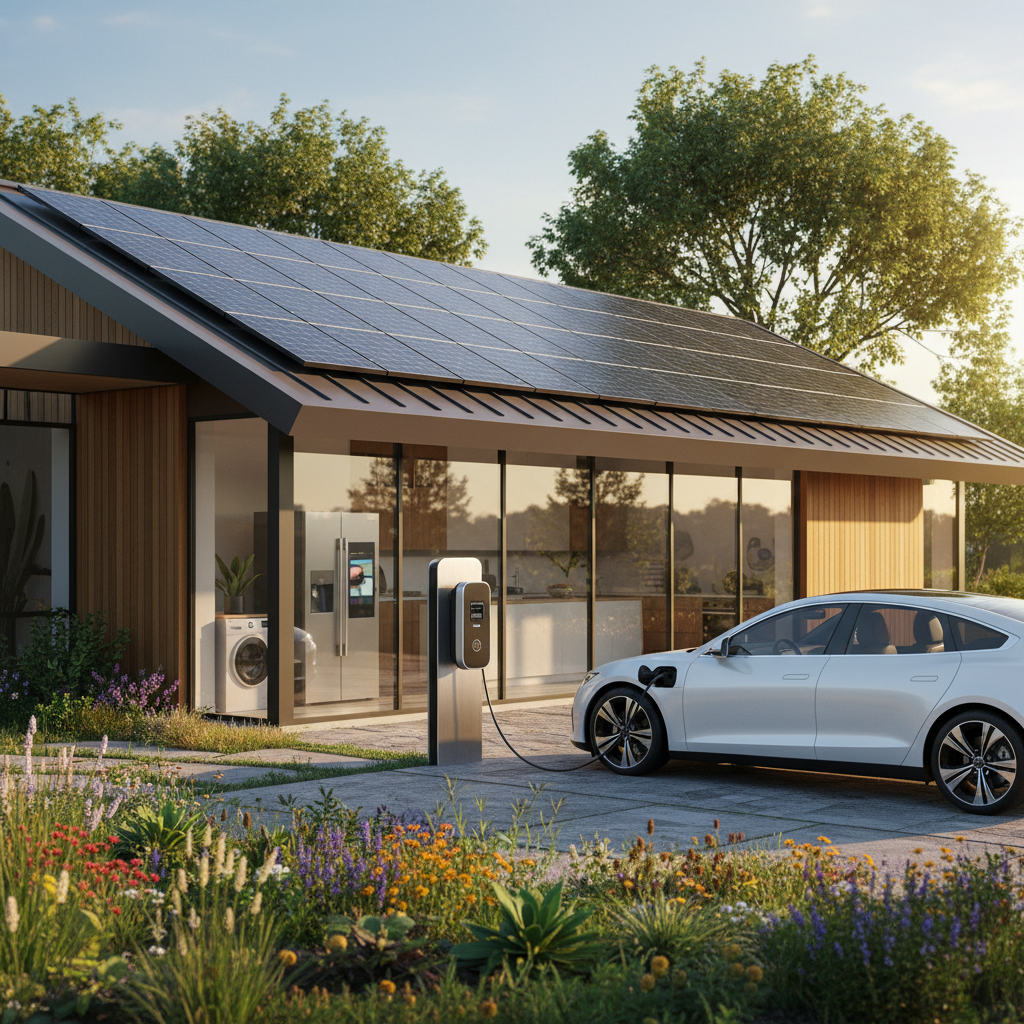
Solar + EV Charging: Designing the Perfect Home Energy System
Key Takeaways
- Solar-plus-storage installations have reached 19.1 GW across 1.8 million residential sites globally as of mid-2025 — and integrating EV charging is now the fastest-growing piece of that puzzle.
- DC-coupled architectures are 5–10% more efficient than AC-coupled systems, and new bidirectional chargers like the $5,990 StarCharge Halo are slashing the cost of entry by 40%.
- Vehicle-to-grid (V2G) and Vehicle-to-Home (V2H) technology is rapidly moving from novelty to mainstream, backed by a global market now valued at $11.89 billion heading into 2026.
- The Matter 1.5 protocol finally enables true plug-and-play interoperability between solar inverters, EV chargers, and smart home devices — eliminating the biggest integration headache of the last decade.
- AI-driven energy arbitrage and Virtual Power Plants are turning homeowners into active energy traders, earning monthly credits while reducing bills.
Owning an electric vehicle and a rooftop solar array used to mean managing two separate systems that barely knew the other existed. Your panels fed the grid during the day. Your EV charged from the grid at night. You paid peak rates, exported cheap, and left significant money on the table.
That era is over.
In 2026, the convergence of bidirectional charging hardware, intelligent energy management software, and favorable policy has finally made it possible — and financially compelling — to design a true home energy ecosystem where your solar panels, battery storage, EV, and appliances work as a single, coordinated unit. Here's exactly how to build one.
Why the Timing Has Never Been Better
The economics driving integrated solar-EV systems are blunt and hard to ignore. Wholesale electricity prices are projected to rise 23% in 2025, with further increases expected in 2026. If you are charging a long-range EV daily, that trajectory directly attacks one of the primary financial arguments for going electric in the first place.
At the same time, the hardware ecosystem has matured dramatically. Tesla, GM, and Ford have all finalized the transition to the NACS charging standard for 2026 models, including native support for home energy backup. That standardization removes one of the most persistent headaches in the residential market — incompatible connectors and proprietary software ecosystems that prevented seamless solar-to-EV energy flow.
And then there is the sheer scale of untapped storage sitting in American driveways. California's EV fleet alone represents an estimated 18.5 GW of potential storage capacity in 2025 — a figure that surpasses every stationary storage installation in the state combined. The infrastructure to unlock that capacity is finally arriving.
Understanding the Architecture: AC-Coupled vs. DC-Coupled Systems
Before you call a single installer, you need to understand the fundamental architectural choice that will define your system's performance and cost for the next 20 years.
AC-coupled systems — the historical default — route solar-generated DC electricity through an inverter to convert it to AC, then through your home's panel, and then back through another inverter or onboard charger to convert it back to DC for battery or EV storage. Every conversion costs you energy. The cumulative loss typically runs 15–20% of your generation.
DC-coupled systems keep the energy in its native DC form from the solar panel all the way to the battery or EV charger, with a single conversion step at the point of household use. Research consistently finds DC-coupled systems are 5–10% more efficient than their AC counterparts — a difference that compounds meaningfully over a 25-year system life.
For homeowners designing a new system from scratch in 2026, the recommendation is clear: specify a DC-coupled architecture. The upfront coordination between your solar inverter, charge controller, and EV charger is more complex, but the efficiency gains and simplified hardware stack are worth it.
The Bidirectional Charging Breakthrough
Bidirectional charging — the ability for your EV to push stored energy back into your home (V2H) or the broader grid (V2G) — was technically possible for years before it was practically accessible. High hardware costs and a fragmented policy environment kept it in the pilot-program category.
April 2026 changed the calculus. The release of the StarCharge Halo at $5,990 represented a 40% price reduction in residential DC bidirectional chargers, bringing the technology within reach of a mainstream renovation budget rather than a luxury-tier upgrade. Pair that with the California Energy Commission's formal March 2026 roadmap to accelerate V2H adoption statewide, and you have both the hardware and the regulatory tailwind aligning simultaneously.
Here is what bidirectional capability actually gives you in practice:
- Whole-home backup during outages without purchasing a separate battery system, using your EV's existing pack (often 70–100 kWh) as your primary reserve
- Peak-shaving by discharging your EV during expensive evening rate windows and recharging from cheap overnight or solar-hour power
- V2G revenue by enrolling in utility-managed programs that compensate you for grid services your EV provides
As Rex Liu, VP of Product Management at Generac, frames it: "In 2026, the solar industry's 'winners' are those who evolve from single-product sellers to comprehensive home-energy providers, integrating everything from HVAC to EV chargers." That shift is not just a business model evolution — it is a design philosophy that homeowners should demand from every installer they evaluate.
The Role of Matter 1.5 and Smart Energy Management
Hardware efficiency means nothing if your devices cannot communicate. For years, a Powerwall, a SolarEdge inverter, and a third-party EV charger might all be sitting in the same garage with no ability to coordinate their behavior. The result: missed arbitrage windows, charging conflicts, and none of the intelligent load-shifting that makes integrated systems financially transformative.
The official release of the Matter 1.5 protocol in early 2026 addresses this directly, enabling seamless interoperability between solar inverters, EV chargers, heat pumps, and smart panels from different manufacturers. You are no longer locked into a single-brand ecosystem to achieve whole-home intelligence.
That interoperability is the foundation for AI-driven energy arbitrage — arguably the most significant behavioral shift in residential energy management in a decade. Smart home energy systems are now autonomously executing strategies that would require constant manual monitoring to replicate:
- Monitoring real-time time-of-use (TOU) rate schedules and weather forecasts
- Deciding when to store, self-consume, sell, or import energy at 15-minute resolution
- Pre-conditioning your home and pre-charging your EV ahead of forecast cloud cover or price spikes
- Automatically enrolling available capacity in Virtual Power Plant (VPP) programs during grid stress events
VPPs, in particular, are rapidly becoming a standard feature rather than an optional add-on. Homeowners who enroll their EV's stored capacity in utility-managed VPP programs are earning monthly bill credits — effectively renting out idle battery capacity during the hours it is not needed for transportation.
Designing Your System: A Step-by-Step Framework
Whether you are building new or retrofitting an existing solar installation, these are the core decisions that determine your system's performance ceiling.
1. Anchor your design around your EV's battery capacity. A 75 kWh EV pack is your largest and most flexible storage asset. Design your solar array size and any supplemental stationary battery around it, not the other way around. A common configuration: 10–14 kW solar array + bidirectional EVSE + 10–15 kWh stationary buffer battery for immediate household backup.
2. Specify DC coupling from the inverter selection stage. Ask installers specifically whether the system allows DC-direct EV charging. If they cannot answer clearly, that is a red flag about their integration expertise.
3. Confirm Matter 1.5 or open-API compatibility for every major component. Your inverter, EV charger, and smart panel should all be on the Matter 1.5 compatibility list or have documented API integrations with your chosen energy management platform.
4. Map your utility's rate structure before sizing anything. TOU rate spreads, export compensation rules, and VPP program availability in your territory will dictate whether your system earns its best returns through self-consumption, arbitrage, or grid services. This analysis should happen before panel count decisions.
5. Evaluate the supply chain and incentive eligibility of your components. Marty Rogers, General Manager of North America at SolarEdge, notes: "2026 marks the definitive turning point where domestic content and non-FEOC supply chains move from being an incentive to a strategic requirement for procurement." Choosing IRA-compliant components with domestic content can increase your federal tax credit from 30% to 40% — a difference worth thousands of dollars on a full system installation.
What a Fully Integrated System Costs — and Earns
A complete solar-plus-storage-plus-bidirectional-EV-charging system in 2026 typically runs $35,000–$65,000 before incentives, depending on system size, battery capacity, and regional labor markets. After the federal Investment Tax Credit and applicable state incentives, all-in costs frequently land in the $22,000–$45,000 range.
Against rising electricity rates and VPP enrollment income, simple payback periods for well-designed systems are compressing toward 7–10 years in high-rate markets, with internal rates of return that are competitive with conventional investments — and a backup power asset that no stock portfolio can replicate during a grid outage.
Bottom Line
The integrated home energy system — solar panels generating power, a smart battery buffering it, a bidirectional EV charger making your vehicle a mobile power plant, and AI software trading energy like a commodity — is no longer a futurist concept. The hardware exists, the standards are in place, the policy support is accelerating, and the economics are compelling. The only question is whether your current installer is equipped to design it.
Ready to stop leaving energy money on the table? Get a free solar proposal from a certified installer in your area today and find out exactly what an integrated solar-plus-EV system could save you.


