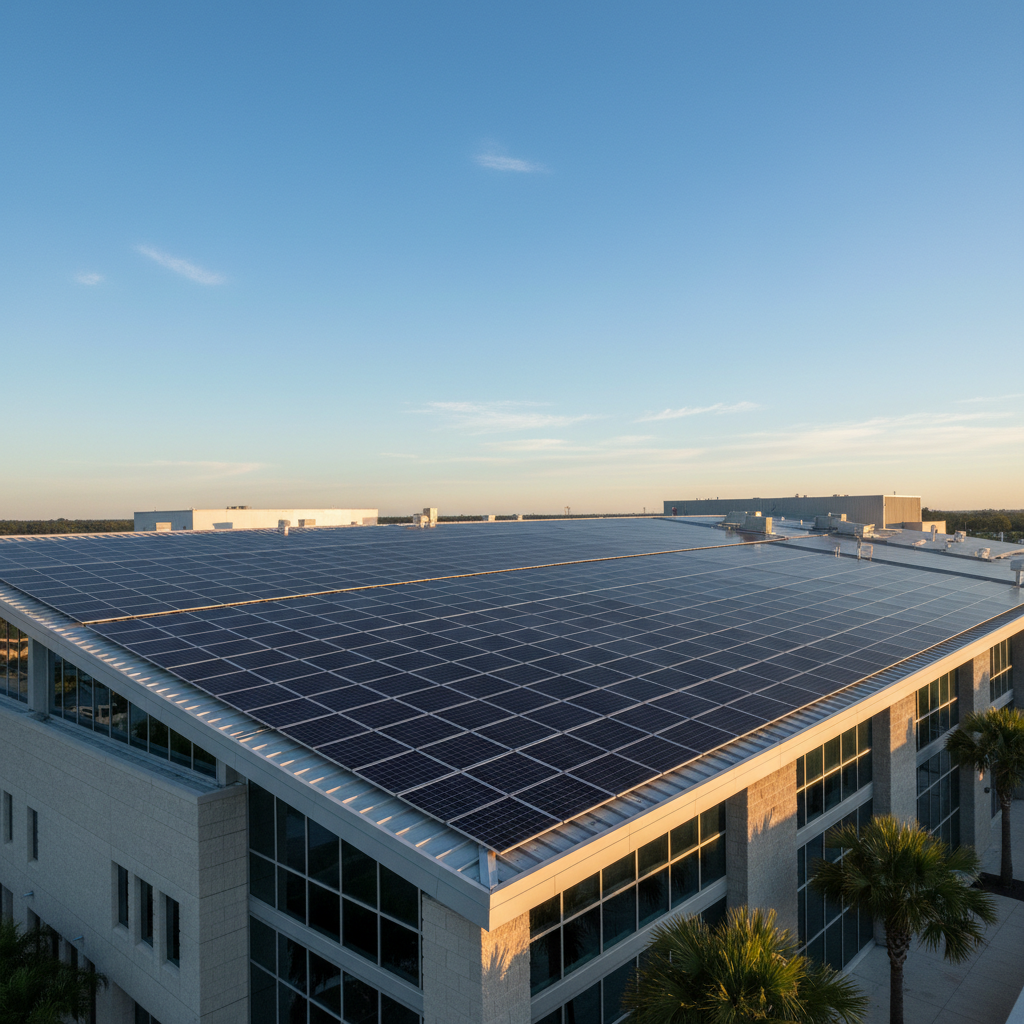
Why Utility Companies Are Fighting Net Metering — and Losing
Published June 2026 | By a Senior Solar Energy Journalist
Key Takeaways
- U.S. electricity prices have surged 33% since 2019, turbocharging consumer demand for rooftop solar and battery storage.
- Residential battery attachment rates have skyrocketed from 14.9% in early 2023 to 70% in Q3 2025, fundamentally changing the economics of going solar.
- Courts and state legislatures are increasingly rejecting utility arguments against distributed solar, blocking punitive fees and anti-solar policies.
- The industry is pivoting from traditional net metering to "net billing" and Virtual Power Plants (VPPs), creating new revenue streams for homeowners.
- Over 13.4 million power shutoffs occurred in 2024 alone — a humanitarian crisis that puts utilities' affordability claims in sharp relief.
The Battle for Your Rooftop Has Never Been Hotter
For the better part of two decades, the relationship between American homeowners and their utility companies has been quietly, then loudly, deteriorating. At the center of that conflict is a policy called net metering — the mechanism that allows solar panel owners to sell surplus electricity back to the grid, effectively running their meter backward and slashing their monthly bills.
Utilities hate it. And for years, they deployed armies of lobbyists and carefully crafted regulatory arguments to dismantle it, state by state, commission by commission. But in 2026, something has fundamentally shifted: the utilities are losing. In the courts, in the legislatures, and in the marketplace, distributed solar and storage are winning battles that seemed unwinnable just three years ago.
Here's why — and what it means for anyone considering going solar today.
Why Utilities Declared War on Net Metering
To understand the fight, you first need to understand the threat that rooftop solar poses to the traditional utility business model.
Investor-owned utilities are legally entitled to earn a regulated rate of return on the infrastructure they build and own — power plants, transmission lines, transformers. When a homeowner installs solar panels and generates their own electricity, they reduce how much power they purchase from the grid. Less consumption means less revenue. Crucially, utilities cannot earn a return on a customer's rooftop — they don't own it.
"The whole reason the utilities created the 'cost shift' narrative was to preserve their profits. They can't earn a rate of return on a customer's rooftop solar panels, so they view it as an existential threat." — Roger Lin, Senior Attorney, Center for Biological Diversity
The industry's primary weapon has been the "cost-shifting" argument: the claim that solar customers who reduce their bills are forcing non-solar customers — often lower-income households — to pay more for grid upkeep. It's a superficially sympathetic argument. It's also one that courts and regulators are increasingly rejecting as a fig leaf for profit protection.
The Electricity Affordability Crisis Utilities Helped Create
Before accepting utility arguments about protecting ratepayers, consider the track record. U.S. electricity prices rose by 4.8% in 2025 alone, extending a trend of 33% increases since 2019 — increases that occurred almost entirely under utility management. Federal data released in April 2026 revealed that utility companies issued over 13.4 million power shutoffs in 2024 due to unpaid bills, the clearest possible evidence of a systemic affordability failure.
Meanwhile, utility CEOs are enjoying record compensation packages. Maryland regulators were moved to enact rules in 2026 specifically limiting the amount of executive pay that utilities can pass on to ratepayers — an extraordinary regulatory intervention that speaks volumes about where the money has actually been going.
The "utility death spiral" — where rising maintenance costs drive up rates, which push more consumers toward solar, which raises rates further — is not a fringe theory. It's playing out in real time across the country.
The Courts Push Back: A Legal Reckoning
2025 and 2026 have brought a series of significant legal and regulatory victories for the distributed solar industry.
In California, the state Supreme Court is currently reviewing a 2026 appeal to overturn the controversial "net billing" policy known as NEM 3.0. An August 2025 ruling already criticized regulators for giving excessive deference to utility interests when they slashed export rates for solar customers. The legal challenge reflects a growing judicial willingness to scrutinize whether utility-friendly policies actually serve the public interest.
At the federal level, a U.S. federal court issued a preliminary injunction in April 2026 blocking Department of the Interior policies that attempted to slow renewable energy permitting on federal lands — a significant win for the broader clean energy buildout that underpins the solar market.
"The courts are finally starting to block illegal regulatory attacks that drive up energy costs. Solar and storage are the fastest tools we have to lower prices and bolster grid leadership." — Darren Van't Hof, Interim CEO, Solar Energy Industries Association (SEIA)
The pattern is consistent: when utilities use regulatory bodies to impose solar fees or reduce compensation for exported energy, they are increasingly finding those decisions subject to legal challenge — and losing.
The Battery Storage Revolution Changes Everything
Perhaps the most underappreciated development in the solar industry over the past two years is the explosive growth of battery storage adoption. Residential battery attachment rates for new solar installations reached 70% in Q3 2025, up from just 14.9% in early 2023. That is not incremental growth — it is a fundamental transformation of the product being sold.
Why does this matter for the net metering fight? Because batteries render many utility arguments moot.
When a homeowner pairs solar with a battery system, they can:
- Store surplus solar generation instead of exporting it to the grid at unfavorable rates
- Discharge stored energy during peak hours (typically 6–9 PM) when electricity rates are highest and grid stress is greatest
- Reduce or eliminate grid dependence regardless of what net metering policies say
- Participate in Virtual Power Plant (VPP) programs that pay them to dispatch stored energy back to the grid on utility terms
The economics back this up. In California's post-NEM 3.0 environment, solar-plus-storage systems now offer a 7–8 year payback period, actually outperforming solar-only systems, which now take 8–10 years. The battery isn't just an add-on anymore — it's the product.
Virtual Power Plants: From Pilot to Foundation
The rise of VPPs represents perhaps the most ironic twist in the utility-versus-solar saga. Having spent years arguing that distributed solar is a burden on the grid, utilities are now paying homeowners to use their batteries as grid assets.
VPPs aggregate thousands of home battery systems into a coordinated network that can discharge energy during peak demand events — precisely the moments when grid operators are most stressed. What were once small pilot programs have matured into foundational grid infrastructure, with utilities in multiple states now operating VPPs at meaningful scale.
This shift acknowledges a truth utilities resisted for years: distributed energy resources aren't a threat to grid stability. They're one of the best tools available to ensure it.
States Are Moving Fast — In Both Directions
The policy landscape in 2026 reflects a nation in genuine transition.
Virginia made headlines in April 2026 when Governor Abigail Spanberger signed landmark legislation mandating the deployment of 20.78 GW of energy storage to support grid reliability — one of the most ambitious storage mandates in U.S. history. It's a clear signal that state-level leadership is no longer waiting for utilities to voluntarily embrace distributed energy.
On the supply side, the Energy Information Administration projects 86 GW of new utility-scale capacity to come online in 2026, with solar and storage accounting for a remarkable 79% of all planned additions. The energy transition is not a future event. It is the present reality of how America is adding power capacity.
The states where utilities have successfully weakened net metering — including California with NEM 3.0 — have seen the market respond not by slowing down solar adoption, but by accelerating battery adoption. Policymakers who thought they were protecting utility revenue streams may have inadvertently accelerated the very shift they were trying to prevent.
What This Means for Homeowners Considering Solar in 2026
The net metering fight is real, and policy environments do vary by state. But several things are now clear for prospective solar buyers:
- Battery storage is no longer optional in most markets — it is the foundation of a resilient, financially sound system
- The payback math still works, and in many cases works better than it did three years ago when export rates were higher
- Legal and legislative momentum is moving toward greater protection for solar homeowners, not less
- VPP participation offers a new revenue stream that didn't meaningfully exist two years ago
- Grid electricity prices will likely keep rising, making the value of on-site generation and storage greater over time, not less
The utilities' argument — that solar customers are freeloaders harming their neighbors — has failed to gain traction with courts, failed to slow consumer adoption, and failed to survive scrutiny of utility companies' own pricing and profit records.
Bottom Line
The war over net metering was never really about cost-shifting or grid fairness. It was about which model of electricity generation — centralized utility ownership or distributed homeowner generation — would define America's energy future. In 2026, the answer is becoming clear: distributed solar and storage are winning, backed by falling costs, stronger legal protections, soaring battery adoption, and a consumer affordability crisis that utilities themselves helped create. The fight isn't over, but the trajectory is unmistakable.
If rising electricity bills have you reconsidering your energy options, get a free, no-obligation solar proposal today and find out exactly what solar-plus-storage could save you.


