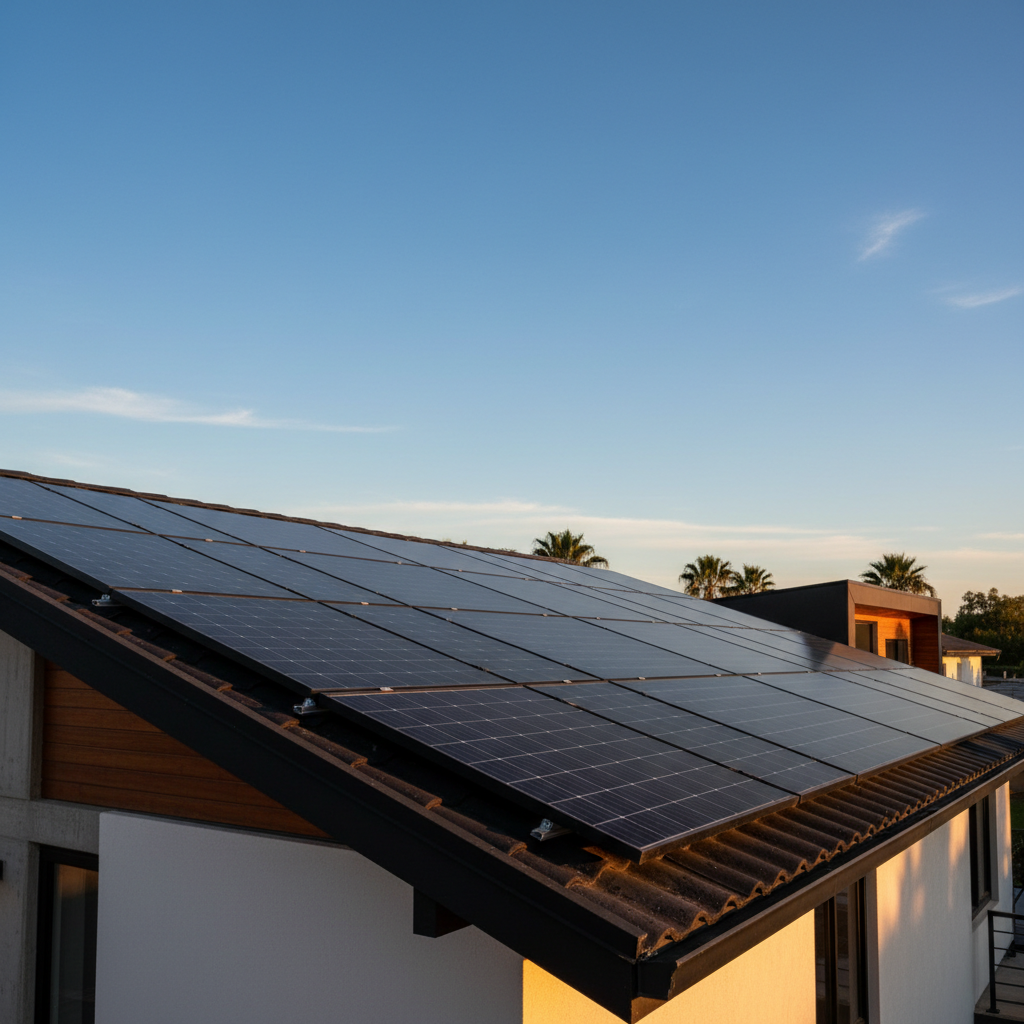
The Rise of Community Solar: What It Means If Your Roof Isn't Suitable
By a Senior Solar Energy Journalist | Updated June 2026
Key Takeaways
- U.S. community solar surpassed 10 GW of cumulative capacity in late 2025, marking a historic milestone for the sector.
- Homeowners, renters, and businesses with unsuitable roofs can subscribe to offsite solar arrays and save 10%–20% on electricity bills in leading markets.
- A national development pipeline exceeding 8 GW signals robust near-term growth, despite turbulent federal policy headwinds.
- New billing innovations and stricter low-to-moderate income (LMI) mandates are making community solar more accessible than ever before.
- State-level policy varies dramatically — Maryland is thriving, California is struggling, and New Jersey is aggressively scaling up.
What Is Community Solar, and Why Does It Matter Now?
For millions of American households, the dream of going solar has always come with a frustrating asterisk. Your roof might face the wrong direction. It might be too shaded, too old, or structurally insufficient to support panels. If you rent your apartment, the decision isn't even yours to make. Until recently, these obstacles effectively locked out a substantial portion of the population from participating in the clean energy transition.
Community solar changes that equation entirely. Instead of installing panels on your own property, you subscribe to a share of a larger, offsite solar array — typically located within your utility service territory. The electricity that array generates flows into the grid, and your account receives a proportional credit that reduces your monthly bill. No installation. No roof assessment. No long-term ownership commitment.
This model has quietly evolved from a niche policy experiment into a mainstream energy product. In late 2025, cumulative U.S. community solar capacity officially crossed 10 gigawatts (GWdc) — a milestone that would have seemed audacious just five years ago. Understanding what's driving this growth, and where the friction points remain, is essential for any consumer or policymaker navigating the energy landscape in 2026.
The Numbers Behind the Boom
The 10 GW milestone is more than a symbolic achievement. It represents real infrastructure, real bill savings, and a development machine that shows no signs of slowing down.
As of early 2026, the national community solar development pipeline exceeds 8 GW, with nearly 30% of that capacity already under construction. Wood Mackenzie Senior Analyst Caitlin Connelly frames the trajectory this way:
"The segment's near-term growth is anchored by a strong project development pipeline that now exceeds 8 GWdc, navigating a complex federal policy landscape."
That nuance — "navigating a complex federal policy landscape" — is critical context. The sector is growing despite headwinds, not because the regulatory environment is uniformly favorable.
On the cost side, the industry made meaningful progress in 2025. Subscriber acquisition costs fell by an average of 12%, driven primarily by the adoption of consolidated billing platforms and digital enrollment tools that dramatically reduce the paperwork and friction historically associated with signing up. This is not a trivial improvement: high customer acquisition costs have been one of the sector's most persistent structural challenges, and reducing them directly improves project economics and speeds up deployment.
What Subscribers Actually Save
The financial case for community solar subscriptions has become increasingly concrete. In leading markets like New York and New Jersey, residential subscribers are receiving guaranteed electricity bill savings of 10% to 20%. For a household paying $150 per month in electricity costs, that translates to $180 to $360 in annual savings — without any upfront investment, roof modification, or maintenance responsibility.
How does it work mechanically? When you subscribe, you agree to purchase a portion of the output from a community solar project, typically for a period of 12 to 25 years (though shorter-term options are increasingly available). The solar credits generated by your share are applied directly to your utility bill, and you pay the project developer a slightly lower rate for those credits than you'd otherwise pay your utility for conventional electricity. The difference is your savings.
The recent push toward consolidated billing — where your solar credits and utility charges appear on a single statement — has been a game changer for adoption, particularly among apartment dwellers who were previously confused by receiving two separate monthly bills. This streamlined approach removes one of the most frequently cited barriers to subscription completion.
The State-by-State Reality: Thriving Markets and Cautionary Tales
Community solar is fundamentally a state-level product, governed by utility commission rules, legislative mandates, and interconnection policies that vary enormously across the country. The divergence between leading and lagging states has never been more pronounced.
Maryland: A Model for Permanence
On January 1, 2025, Maryland officially transitioned its community solar program to permanent status, removing previous capacity caps and simplifying billing requirements for subscribers. This regulatory certainty — the knowledge that the program won't sunset or get restructured midway through a project's lifespan — is precisely what developers and investors need to commit capital at scale. Maryland's approach has become a template that advocates are actively pushing other states to replicate.
New Jersey: Legislating Ambition
New Jersey is making perhaps the boldest near-term bet in the country. The state's 2025 legislation targets the unlocking of 3,000 MW of community solar capacity — enough to power over half a million households. What makes New Jersey's framework particularly notable is its equity mandate: new project allocations must achieve at least 51% participation from low-to-moderate income (LMI) households. This isn't a soft goal. It's a hard requirement that shapes how developers structure their subscriber acquisition strategies and pricing models.
New York has adopted similar LMI-first thinking, reflecting a broader national trend toward using community solar as a deliberate tool for energy equity rather than simply a vehicle for cost savings among already-advantaged households.
California: A Market in Crisis
Not every state story is a success. California — the nation's largest solar market overall — presents a sobering contrast. In April 2026, California regulators approved a new community renewable energy framework that industry advocates immediately criticized as deeply flawed. Stephanie Doyle, California State Affairs Director for SEIA, was unequivocal in her assessment:
"The CPUC has issued a decision that virtually ensures no projects will be built, crushing any chance of a viable community solar program in California."
For a state with aggressive clean energy targets and millions of renters and unsuitable-roof homeowners who could benefit from community solar access, this regulatory failure carries serious consequences — both for consumers and for the state's broader decarbonization timeline.
Federal Policy: Turbulence at the Top
The federal policy environment in 2025 and 2026 introduced significant uncertainty into the sector. In August 2025, the EPA announced the termination of the $7 billion "Solar for All" program — an initiative specifically designed to expand solar access for low-income and disadvantaged communities. The cancellation triggered multiple federal lawsuits from environmental and labor coalitions, and the legal proceedings remain ongoing as of mid-2026.
The loss of Solar for All funding is a genuine blow to LMI-focused community solar deployment. Many projects that had been designed around that grant funding are now scrambling to find alternative financing or have been placed on indefinite hold. For communities that stood to benefit most, the practical impact is a delayed — and in some cases, eliminated — path to clean energy access and bill relief.
Emerging Trends Reshaping the Sector
Beyond policy battles, several technical and market trends are fundamentally changing what community solar looks like and how it functions:
- Community-scale projects up to 20 MW that connect directly to distribution grids are gaining traction, improving local grid reliability and meeting rising energy demand without the transmission constraints associated with utility-scale solar.
- Battery storage integration is becoming standard practice. Pairing solar arrays with energy storage systems gives projects "grid-forming" capabilities and allows them to manage peak load during evening hours when solar generation drops — a critical feature as grid operators face growing stress from electrification.
- Market consolidation is accelerating. In 2026, Perch Energy acquired Solstice in a landmark deal that resulted in just four major subscription management entities controlling approximately 55% of all U.S. operational community solar capacity. This consolidation brings scale efficiencies but also raises questions about market competition and consumer choice going forward.
- Digital-first enrollment has become the industry standard, reducing subscriber acquisition costs and enabling faster program scaling across multiple states simultaneously.
Is Community Solar Right for You?
If your roof is shaded, structurally compromised, renter-occupied, or otherwise unsuitable for traditional solar installation, community solar deserves serious consideration. Here's a practical checklist to assess your options:
- Check program availability in your state — Maryland, New York, New Jersey, Illinois, Massachusetts, and Minnesota currently have the most robust markets.
- Compare subscription terms carefully. Look for programs with no enrollment fees, clear savings guarantees (10%–20% is realistic in strong markets), and flexible exit clauses.
- Ask about consolidated billing — receiving a single monthly statement is a strong indicator of a well-run program.
- Inquire about LMI eligibility — if your household income qualifies, you may access deeper discounts or priority enrollment under state mandate programs.
- Verify the project is operational or has a confirmed construction start date — pipeline projects carry more uncertainty than operational arrays.
Bottom Line
Community solar has arrived as a genuine, scalable alternative to rooftop solar, crossing the 10 GW milestone with a development pipeline that signals years of continued growth ahead. For the millions of Americans who can't put panels on their own roofs — renters, condo owners, households with shaded or aging roofs — it represents the most accessible and financially meaningful pathway into clean energy today. State policy quality remains the defining variable: Maryland and New Jersey are setting the standard, while California's regulatory dysfunction stands as a warning of what's at stake when frameworks fail. Federal headwinds are real, but the fundamentals of the sector — falling costs, rising demand, and an 8 GW construction pipeline — suggest community solar's upward trajectory is durable.
Get a free solar proposal today to find out whether a rooftop system, a community solar subscription, or a combination of both makes the most financial sense for your home or business.


