Solar Installer Misclassification in California: Are You Really an Independent Contractor?
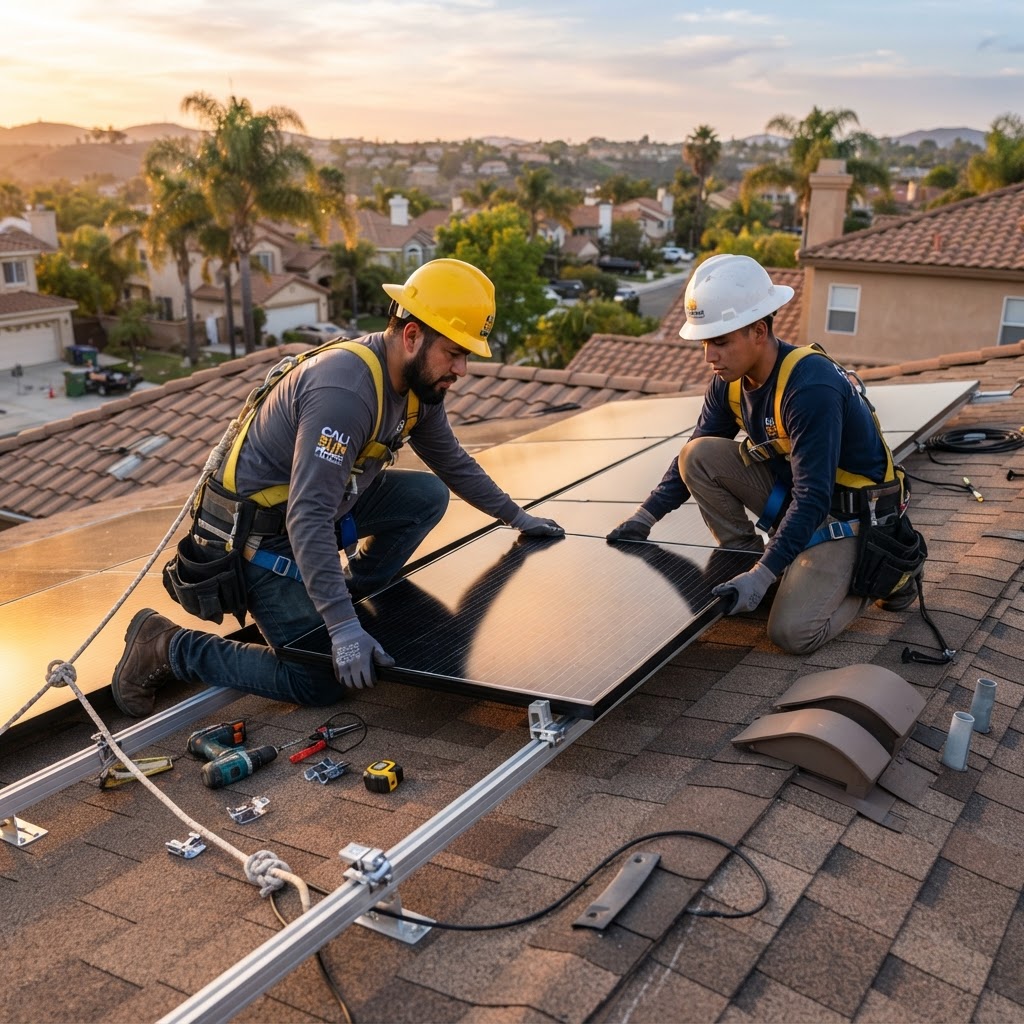
California's solar industry added tens of thousands of installation jobs over the last decade — and behind many of those jobs is a quiet legal problem that costs workers real money. Across rooftops from Fresno to San Diego, solar installers are showing up to job sites, following employer schedules, using employer-provided equipment, and going home without overtime pay, workers' compensation coverage, or the right to an uninterrupted meal break. Why? Because they've been classified — often incorrectly — as independent contractors.
If you install solar panels in California and receive a 1099 at tax time instead of a W-2, this article is for you.
Key Takeaways
- California uses the strict ABC test (codified by AB 5) to determine whether a worker is an employee or an independent contractor — and most solar installers fail it.
- Misclassification strips workers of overtime pay, meal and rest breaks, unemployment insurance, state disability insurance, and workers' compensation.
- Labor Code § 226.8 makes willful misclassification a civil penalty offense in California, with fines up to $25,000 per violation.
- Red flags include receiving a 1099, having no control over your schedule or work methods, using the hiring company's tools, and working exclusively for one solar company.
- Solanano vets installers to confirm they operate as legitimate W-2 employers with proper workers' comp coverage — protecting both homeowners and crews.
- Misclassified workers have legal options, but strict deadlines apply — acting quickly matters.
What Is Independent Contractor Misclassification?
Misclassification happens when a company labels a worker as an independent contractor — legally and for tax purposes — when that worker should actually be classified as an employee under the law. It's not always intentional fraud. Sometimes companies do it out of ignorance. But often, it's a deliberate cost-cutting strategy: no payroll taxes, no overtime liability, no workers' comp premiums, no meal break penalties.
For solar installation companies, the financial incentive is enormous. A crew of five "1099 contractors" instead of five employees can save a solar contractor tens of thousands of dollars per year. That savings comes directly out of workers' pockets.
Solar is a particularly high-risk industry for misclassification because installation work is project-based, crews often move between job sites, and the industry has grown so fast that compliance infrastructure hasn't kept pace. Many smaller installation outfits operate on thin margins and treat labor law compliance as optional.
How California Law Determines Employee vs. Contractor Status
California applies one of the strictest worker classification standards in the nation. Under the landmark Dynamex Operations West, Inc. v. Superior Court (2018) decision and the subsequent codification in AB 5 (Assembly Bill 5, 2019), most workers in California are presumed to be employees unless the hiring company can satisfy all three prongs of the ABC test.
To classify a worker as an independent contractor, the company must prove all of the following:
A — The worker is free from the control and direction of the hiring entity in connection with the performance of the work, both under the contract and in fact.
B — The worker performs work that is outside the usual course of the hiring entity's business.
C — The worker is customarily engaged in an independently established trade, occupation, or business of the same nature as the work performed.
For solar installation companies, prong B is almost always fatal. If a solar installation company hires someone to install solar panels — which is the company's core business — that worker almost certainly cannot be classified as an independent contractor under California law. Period.
Violations of this standard are not just a tax issue. California Labor Code § 226.8 specifically prohibits willful misclassification and authorizes civil penalties of $5,000 to $15,000 per violation, jumping to $10,000 to $25,000 per violation if the Labor Commissioner finds a pattern or practice of violations. The company can also be required to post a public notice on its website admitting the violation.
Red Flags: Is Your Solar Job Misclassifying You?
Not every 1099 arrangement is illegal — but in the solar industry, most are. Here are the warning signs that you may be misclassified:
- You receive a 1099-NEC instead of a W-2 at tax time, meaning you're responsible for self-employment taxes the employer should be covering.
- The company controls your schedule — telling you when to show up, which jobs to take, and how to sequence the work.
- You use the company's tools, vehicles, or materials rather than your own equipment.
- You work exclusively or primarily for one company and cannot freely market your services to others.
- You're paid a flat daily or per-panel rate with no overtime, regardless of how many hours you work.
- You don't receive meal breaks or rest periods, even on 10- or 12-hour installation days.
- There's no workers' compensation coverage if you're injured on the roof.
- You were never presented with a legitimate contractor agreement establishing you as a separate business entity.
If several of these apply to you, you are very likely misclassified under California law.
What Solar Workers Lose When Misclassified
Misclassification isn't just a technicality — it has direct, concrete financial consequences:
Overtime Pay: California requires overtime at 1.5x for hours over 8 in a day and over 40 in a week, and double time for hours over 12 in a day. Misclassified contractors receive none of this. On a 10-hour installation day, that's two hours of unpaid overtime — every single day.
Meal and Rest Breaks: California Labor Code §§ 226.7 and 512 entitle employees to a 30-minute unpaid meal break for shifts over five hours and a paid 10-minute rest break for every four hours worked. Employers who fail to provide these owe one additional hour of pay per missed break — a penalty most 1099 solar workers never collect.
Workers' Compensation: Roofing and solar installation is physically dangerous work. Falls, electrical hazards, and heat-related illness are real risks. Employees are covered by mandatory workers' comp insurance. Misclassified workers are not — and a serious injury can mean catastrophic out-of-pocket medical costs and lost wages with zero employer liability.
Unemployment Insurance (UI) and State Disability Insurance (SDI): Employees have UI and SDI contributions made on their behalf. Contractors do not. If you're injured, laid off, or the project ends, you have no safety net.
Retaliation Protections: California Labor Code § 98.6 and § 1102.5 protect employees who complain about wage theft or unsafe conditions. Misclassified workers have significantly weaker legal standing when they face retaliation for speaking up.
How Solanano's Vetting Process Protects Workers and Homeowners
At Solanano, we don't just match homeowners with solar installers — we vet them. A core part of that vetting is confirming that installation companies operate as legitimate, compliant employers.
That means we verify:
- Active contractor's license with the California Contractors State License Board (CSLB)
- Valid workers' compensation insurance covering all installation crew members
- Proper employer classification — W-2 crews, not cash-paid or 1099 labor operations
- General liability coverage that protects homeowners if something goes wrong on their roof
Why does this matter for homeowners? Under California law, a homeowner who hires an unlicensed or uninsured contractor can be held liable for injuries to workers on their property. Hiring through an installer that misclassifies workers as contractors — often without proper workers' comp — puts the homeowner directly at legal and financial risk.
For workers, our vetting process means the companies in our network are held to a higher standard. When you work for a Solanano-vetted installer, you are more likely to be properly classified, covered by workers' comp, and working for a company that takes its legal obligations seriously.
What a Misclassified Solar Worker Can Do
California's worker protection framework is among the strongest in the country — but it only helps you if you use it. If you believe you've been misclassified, here are your options:
- File a wage claim with the California Labor Commissioner's Office (DLSE). You can recover unpaid overtime, missed meal and rest break premiums, and other wage theft going back three years (four years for claims under Business & Professions Code § 17200).
- File a PAGA (Private Attorneys General Act) lawsuit. This allows workers to sue on behalf of themselves and co-workers for Labor Code violations, with civil penalties split between the worker and the state.
- Report to the EDD (Employment Development Department) if you believe your employer has been avoiding payroll tax obligations through misclassification.
- Consult an employment attorney. California has strong fee-shifting laws, meaning attorneys often take misclassification cases on contingency — you pay nothing unless you win.
Deadlines are strict. Many wage claims must be filed within three years of the violation, and some penalties have shorter windows. If you suspect you're misclassified, you can review your California employment rights and request a free claim evaluation before time runs out.
Bottom Line
California's solar boom has created real opportunity — but it has also created cover for companies that pad their margins by misclassifying installation crews as independent contractors. Under the ABC test and AB 5, the vast majority of solar installers in California are legally employees, entitled to overtime, breaks, workers' comp, and the full protection of the Labor Code. If you're receiving a 1099, working under someone else's control, and going without those protections, the law is likely on your side.
At Solanano, we believe good solar starts with good business practices — for homeowners and for the workers on the roof. Ready to see what a properly vetted, fully insured solar installation looks like? Get your free solar assessment from Solanano today.


