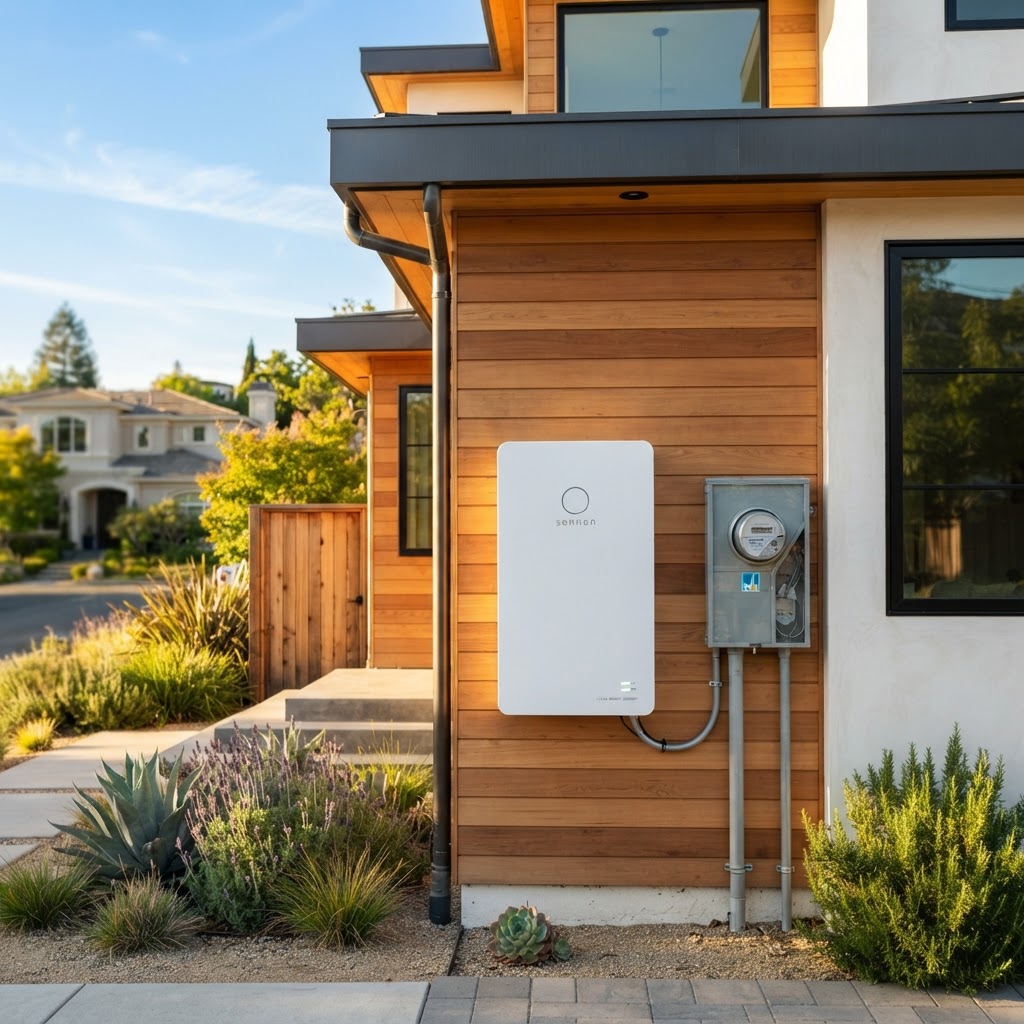
SGIP Battery Incentive California Low-Income: How to Qualify and Apply
Key Takeaways
- California's $280M Residential Storage and Solar Equity (RSSE) program offers low-income households up to $1,100/kWh for battery storage and $3,100/kW for paired solar.
- A typical 7 kW solar + 10 kWh battery system can yield up to $32,700 in combined state incentives — enough to cover 100% of installation costs.
- You qualify if your household income is at or below 80% of Area Median Income (AMI), or if you're enrolled in CARE, FERA, or ESA utility discount programs.
- Applications must go through SGIP-registered contractors — homeowners cannot apply directly.
- Active waitlists are open now on SelfGenCA across PG&E, SCE, SDG&E, SoCalGas, and LADWP territories.
- General market residential storage incentives have largely closed — RSSE is now the primary residential pathway into 2026.
California has never offered a more generous, more targeted battery incentive for low-income homeowners — and most eligible families still don't know it exists. The Self-Generation Incentive Program's Residential Storage and Solar Equity (RSSE) initiative is quietly rewriting what's financially possible for disadvantaged households across the state: zero-cost solar-plus-storage systems, real protection against grid outages, and a path toward genuine energy independence.
Here's everything you need to know about how to qualify, how to apply, and how to avoid the pitfalls that cause eligible households to lose their place in line.
What Is SGIP, and What Changed for Low-Income Households?
The Self-Generation Incentive Program (SGIP) is administered by the California Public Utilities Commission (CPUC) and funded through ratepayer surcharges. It has existed in various forms since 2001, historically offering battery storage rebates to a broad range of residential and commercial customers.
That model has fundamentally shifted. By late 2025, the CPUC directed that general market residential storage incentives close entirely, redirecting program administration toward equity, low-income, and high-fire-threat communities. The vehicle for that shift is the $280 million Residential Storage and Solar Equity (RSSE) budget — the most ambitious low-income clean energy initiative California has funded to date.
As Elena Vasquez, Director of Clean Energy Equity at the California Distributed Energy Alliance, explains: "The RSSE program represents a total shift in California's distributed energy policy. By providing $1,100 per kilowatt-hour of storage, the state is making sure disadvantaged communities get real resilience against outages without taking on debt."
For low-income homeowners who have watched solar and storage remain out of financial reach for years, this is the inflection point.
How Much Is the SGIP Low-Income Incentive Worth?
The RSSE tier offers two stacked incentive rates:
- $1.10 per watt-hour ($1,100/kWh) for battery storage
- $3.10 per watt ($3,100/kW) for paired solar generation
On a typical single-family installation — say, a 7 kW solar system paired with a 10 kWh battery — those rates translate to:
| Component | Size | Rate | Incentive Value | |---|---|---|---| | Battery Storage | 10 kWh | $1,100/kWh | $11,000 | | Solar (paired) | 7 kW | $3,100/kW | $21,700 | | Total RSSE | | | $32,700 |
When stacked with the federal 30% Investment Tax Credit (ITC) and any remaining California utility rebates, eligible households can realistically reach 100% cost coverage with zero out-of-pocket expense and no financing required.
It's worth noting that RSSE enforces a standard storage cap of 15 kWh without special justification — a design choice rooted in maximizing on-site self-consumption during California's peak evening rate periods, which is especially important under NEM 3.0's time-of-use structure.
Do You Qualify? SGIP Low-Income Eligibility Requirements
Eligibility for RSSE's equity tiers is determined through two parallel pathways:
Pathway 1: Income-Based Qualification
Your household's annual gross income must not exceed 80% of the Area Median Income (AMI) for your county. AMI limits vary by county and household size — for example, 80% AMI for a family of four in Los Angeles County is meaningfully different from the same calculation in Fresno or San Diego.
Pathway 2: Categorical Program Enrollment
You automatically qualify if your household is already enrolled in any of the following California utility assistance programs:
- CARE (California Alternate Rates for Energy)
- FERA (Family Electric Rate Assistance)
- ESA (Energy Savings Assistance Program)
If you receive a discount on your utility bill through any of these programs, you are categorically eligible for RSSE — no separate income documentation is required. This is the fastest qualification path for many households.
Geographic Eligibility
RSSE is now available across all major utility territories, including:
- PG&E, SCE, SDG&E, and SoCalGas (investor-owned utilities)
- LADWP and other municipal utilities (POUs)
- Customers of Community Choice Aggregators (CCAs)
The CPUC's statewide expansion addressed a long-standing gap where municipal utility customers — particularly LADWP ratepayers — were excluded from earlier SGIP equity tiers. That exclusion is now closed.
How to Apply: The Contractor-Managed Process
This is the detail that trips up most eligible families: you cannot apply for SGIP RSSE directly. All applications must be submitted by a SGIP-registered contractor on your behalf. Homeowners who attempt to self-navigate the SelfGenCA portal will find they lack the access credentials to submit a reservation.
As Marcus Sterling, Principal Grid Infrastructure Analyst at Pacific Clean Energy Insights, notes: "Because applications must be handled entirely through registered contractors, the greatest barrier in 2026 isn't the incentive money — it's matching eligible 80% AMI households with reputable installers who understand the SelfGenCA documentation pipeline."
That observation carries real weight. Errors or missing documentation in the SelfGenCA submission pipeline can result in reservation cancellations that push households back to the end of the waitlist.
Step-by-Step Application Process
- Confirm eligibility — Verify your CARE/FERA/ESA enrollment or calculate your household income against your county's 80% AMI threshold.
- Find an SGIP-registered, vetted contractor — Only contractors registered on the SelfGenCA platform can submit RSSE reservations. Not all solar companies qualify.
- System design and sizing — Your contractor will size the system to RSSE guidelines, typically capping storage at 15 kWh and engineering solar to maximize self-consumption under NEM 3.0 time-of-use rates.
- Reservation submission — The contractor submits your application through SelfGenCA. If the active budget is exhausted, your application enters the replenishment waitlist, which recycles funds from canceled or expired commercial and general reservations.
- Incentive assignment and financing — The rebate is typically assigned directly to the contractor, who uses it to reduce or eliminate your upfront installation cost. No waiting for a check.
- Installation and interconnection — After reservation approval, installation proceeds with utility interconnection. Most SGIP systems must be operational within a defined timeline to avoid reservation expiration.
- Demand response enrollment — Within 12 months of installation, applicants are increasingly required to enroll in utility Virtual Power Plant (VPP) or demand response programs, supporting broader grid stability in exchange for additional compensation in some programs.
Waitlists, Timing, and What to Expect in 2026
SGIP program administrators have confirmed that active waitlists are open on SelfGenCA for 2025–2026 RSSE applications. The waitlist isn't a dead end — funds are continuously recycled from canceled commercial and general-tier reservations into the low-income queue. Households that submit complete, well-documented applications through qualified contractors are consistently moving through.
The key timing risk is delay. With general market incentives closed and RSSE representing the primary open residential pathway into 2026, demand on the equity budget is intensifying. Households that qualify and wait are competing with a growing pool of applicants navigating the same waitlist.
Why Independent Guidance Matters More Than Ever
The contractor-dependency built into RSSE creates a structural vulnerability: eligible families are entirely reliant on the quality and integrity of the contractor they choose. An installer unfamiliar with the SelfGenCA documentation pipeline, or one more focused on equipment margins than accurate system sizing, can cost you your reservation.
This is precisely where independent advisory firms like Solanano provide a critical function. As an independent solar engineering and project management company — not an installer, not an equipment seller — Solanano has no financial stake in which system you buy or which contractor installs it. Their 4-stage installer qualification process (license and insurance verification, NABCEP certification, track record review, and performance scoring) is specifically designed to surface the contractors who understand complex programs like SGIP RSSE.
Solanano's hyperlocal tools — satellite irradiance modeling, shade analysis, and NEM 3.0-aware financial modeling — also ensure your system is engineered to maximize the RSSE incentive structure, not just meet the minimum threshold for approval. For a program where system sizing directly determines incentive value, that engineering precision matters enormously.
Bottom Line
California's SGIP RSSE program is the most consequential low-income energy incentive the state has ever deployed. With up to $32,700 in combined incentives available for a standard solar-plus-storage system, eligible households can achieve genuine energy resilience — protection from outages, independence from volatile utility rates, and a nano-grid foundation — with no out-of-pocket cost. The income threshold is accessible (80% AMI or CARE/FERA/ESA enrollment), the waitlist is active, and the funding is real. The barrier isn't the money. It's finding the right registered contractor and getting a clean application into SelfGenCA before the queue deepens further.
Get a free, no-obligation solar and storage assessment from Solanano — they'll verify your SGIP eligibility, model your system's full incentive value under NEM 3.0, and match you with a pre-vetted SGIP-registered contractor who can get your RSSE reservation submitted correctly the first time.


