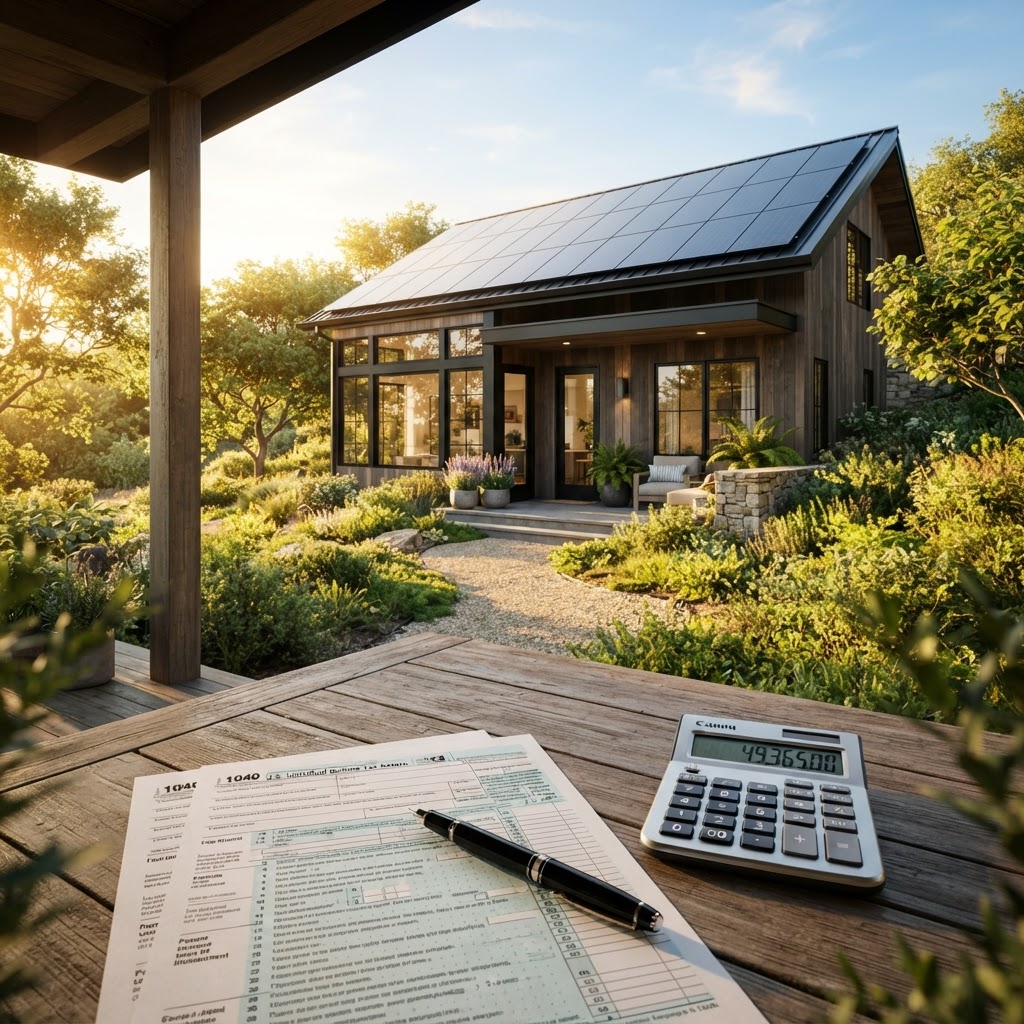
Solar Energy Programs for Low-Income California Households: Complete 2026 Guide
Key Takeaways
- California's equity-first solar programs — including DAC-SASH, SOMAH, and the RSSE pathway — are actively funded in 2026 and specifically designed for low-income households
- General-market SGIP battery incentives are now closed; the Residential Solar and Storage Equity (RSSE) pathway is the primary active storage incentive for qualifying households
- SOMAH installations are saving low-income households an average of $80+ per month on energy bills
- The CPUC's $280 million initiative, combined with federal tax credits, can effectively cover the full upfront cost of solar and battery for eligible customers
- Renters and apartment dwellers may soon gain expanded access through pending SB 868 plug-in solar legislation
- Working with an independent advisor — not a commission-driven installer — is critical to navigating this complex, rapidly evolving incentive landscape
California has always positioned itself at the forefront of the clean energy transition. But as of 2026, the state's solar story is shifting in a profound and deliberate direction: away from broad market incentives and toward a laser focus on the households that need help most.
With over 2 million solar homes and 250,000 battery installations statewide, California's residential solar market has matured. The result is a new era of equity-first funding — one where the most valuable incentives are reserved for low-income families, not early adopters with easy access to capital.
If you're a low-income California homeowner — or an advisor helping one — this guide breaks down every major program available in 2026, what's changed, and how to stack incentives for maximum impact.
Why 2026 Is a Turning Point for Solar Equity in California
The policy environment has shifted decisively this year. General-market rebates have largely dried up, and the CPUC and state legislature are redirecting resources toward communities that were historically priced out of solar.
As Dr. Elena Vance, Senior Policy Analyst at the California Renewable Energy Institute, puts it:
"The era of broad, general-market solar rebates is largely behind us; 2026 is defined by targeted, equity-focused programs that ensure the energy transition doesn't leave low-income families behind."
This shift has very real financial consequences. For qualifying households, the combination of state incentives and federal tax credits has never been more powerful — or more accessible.
DAC-SASH: Rooftop Solar for Low-Income Homeowners
The Disadvantaged Communities — Single-family Affordable Solar Homes (DAC-SASH) program remains one of California's most direct solar equity tools. Administered by GRID Alternatives and funded through California's investor-owned utilities (PG&E, SCE, and SDG&E), it provides qualifying low-income homeowners in disadvantaged communities with heavily subsidized rooftop solar at little to no cost.
Key 2026 update: Effective July 1, 2026, DAC-SASH transitioned its funding source from greenhouse gas allowance (cap-and-trade) revenues to Public Purpose Program (PPP) funds. While the program continues without interruption, this structural change ensures more stable, ratepayer-backed funding going forward — a signal that the state is committed to its longevity.
Who qualifies for DAC-SASH?
- Must be a single-family homeowner served by PG&E, SCE, or SDG&E
- Must be enrolled in the California Alternate Rates for Energy (CARE) program
- Must reside in a designated disadvantaged community (per CalEnviroScreen scoring)
For homeowners who qualify, DAC-SASH can eliminate most or all of the upfront cost of a solar installation — making it one of the most powerful entry points into solar ownership in the state.
SOMAH: Solar for Multifamily Affordable Housing
Low-income Californians who rent in affordable multifamily housing are served by the Solar on Multifamily Affordable Housing (SOMAH) program — and its 2026 numbers are striking.
- 530+ solar installations completed to date
- 65,000+ low-income households expected to benefit from current and ongoing projects
- Average monthly savings of $80+ per household on energy costs
- In 2025 alone, SOMAH processed 220 applications and paid out over $38 million in incentives
SOMAH works by incentivizing property owners and affordable housing developers to install solar on qualifying multifamily buildings, with bill credits flowing directly to low-income tenants. The program is specifically designed so that renters — not just owners — capture a meaningful share of the financial benefit.
If you live in income-restricted affordable housing and your property hasn't applied for SOMAH, encouraging your property manager to explore eligibility could result in meaningful monthly savings for you and your neighbors.
SGIP and the RSSE Pathway: Battery Storage for Low-Income Households
This is the most important program update of 2026 for anyone advising low-income households on energy storage.
As of August 11, 2026, general-market SGIP (Self-Generation Incentive Program) battery budgets are closed. If you're a standard market-rate homeowner, there is currently no state rebate available for battery storage through SGIP.
However, the Residential Solar and Storage Equity (RSSE) pathway — SGIP's equity-focused tier — remains fully active and funded. For qualifying low-income households, RSSE provides:
- Up to $1,100 per kWh of battery storage capacity
- A $3.10 per watt solar adder for pairing battery with new solar
To understand the magnitude of these figures: a standard 10 kWh battery could receive up to $11,000 in RSSE incentives alone, before any federal credits are applied.
Marcus Thorne, Director of Residential Solar Programs at the West Coast Energy Alliance, explains the downstream impact:
"For low-income households, the combination of the RSSE pathway and federal tax credits has effectively neutralized the cost barrier to entry, making solar and storage a zero-down reality for many."
RSSE eligibility generally requires:
- Enrollment in CARE, FERA, or similar income-qualifying utility programs
- Service territory within a participating IOU (PG&E, SCE, SDG&E)
- Meeting SGIP's income documentation requirements
Given that general-market storage incentives are gone, the RSSE pathway is now the single most valuable battery incentive available in California — and it's exclusively for low-income households.
The CPUC's $280 Million Full-Coverage Initiative
In mid-2025, the CPUC launched a $280 million initiative specifically designed to cover the complete cost of solar and battery installations for low-income customers — when combined with available federal tax credits.
This initiative represents a deliberate policy acknowledgment: even with subsidies, upfront financing barriers can block adoption. By structuring funding to work in tandem with the federal Residential Clean Energy Credit (30%), the CPUC has created a pathway where qualifying households may owe nothing out of pocket for a full solar-plus-storage system.
This is a significant development that many homeowners — and even some solar contractors — are not yet fully aware of. Navigating the interaction between state program funding, federal tax credit timing, and installer pricing requires careful, independent financial modeling to ensure you're capturing every available dollar.
NEM 3.0 and Why Battery Storage Matters More Than Ever
California's Net Energy Metering 3.0 tariff, which governs how solar homeowners are credited for energy sent back to the grid, has fundamentally changed the economics of solar-only systems. Export rates under NEM 3.0 are significantly lower than under previous tariffs — meaning a solar system without storage generates less bill savings than it would have three years ago.
For low-income households, this makes the RSSE battery incentive even more critical. With a properly sized battery, households can:
- Store excess solar energy for evening use (when grid rates are highest)
- Maintain power during outages — a resilience benefit that matters especially in wildfire-prone California communities
- Maximize self-consumption, which is now the primary driver of solar financial returns under NEM 3.0
At Solanano, our hyperlocal financial modeling is specifically calibrated for NEM 3.0, incorporating time-of-use rate optimization, utility-specific export rates (including SCE and BWP territory nuances), and SGIP incentive stacking — so low-income households understand their actual projected savings before committing to any system.
What About Renters? SB 868 and the Balcony Solar Movement
One of the most underserved populations in California's solar transition is renters — who represent a large share of low-income households statewide. Traditional rooftop solar is simply inaccessible if you don't own your roof.
California is actively working to change that. SB 868, currently under consideration, would reduce permitting red tape for "balcony solar" — small plug-in solar systems that renters can install on balconies or patios without landlord approval or complex utility interconnection processes. Modeled after successful programs in Germany and other European markets, these systems can meaningfully offset electricity costs even in apartment settings.
SOMAH remains the primary pathway for renters in affordable multifamily housing today, but SB 868 could open a new lane for the millions of Californians in market-rate rentals who currently have no solar options.
How to Stack Incentives: A Quick Reference
For qualifying low-income California homeowners in 2026, here's how the incentive stack can look:
| Incentive | Type | Value | |---|---|---| | DAC-SASH | State grant | Covers most/all solar cost | | RSSE Pathway (SGIP) | State rebate | Up to $1,100/kWh + $3.10/W solar adder | | Federal Clean Energy Credit | Federal tax credit | 30% of system cost | | CPUC $280M Initiative | State program funding | Bridges remaining cost gap | | CARE/FERA Rate Discount | Ongoing utility discount | 18–30% off utility bill |
The interaction between these programs — sequencing, documentation requirements, and utility-specific rules — is genuinely complex. Maximizing this stack requires expert guidance from someone who is not financially motivated by equipment or installation sales.
Bottom Line
California's low-income solar programs in 2026 represent the most comprehensive, financially powerful suite of incentives the state has ever offered to underserved communities. The closing of general-market battery incentives has paradoxically strengthened the position of qualifying households — the RSSE pathway, DAC-SASH, and the CPUC's full-coverage initiative exist specifically for them, not for market-rate buyers.
The challenge is navigating this landscape accurately, avoiding underqualified installers, and ensuring that incentive stacking is done correctly. That's not something a commission-driven sales pitch can reliably deliver.
Get a free, independent solar and storage assessment from Solanano — our team will model your actual savings under NEM 3.0, identify every program you qualify for, and match you with a pre-vetted, licensed California solar professional who has earned that placement through our four-stage qualification process.