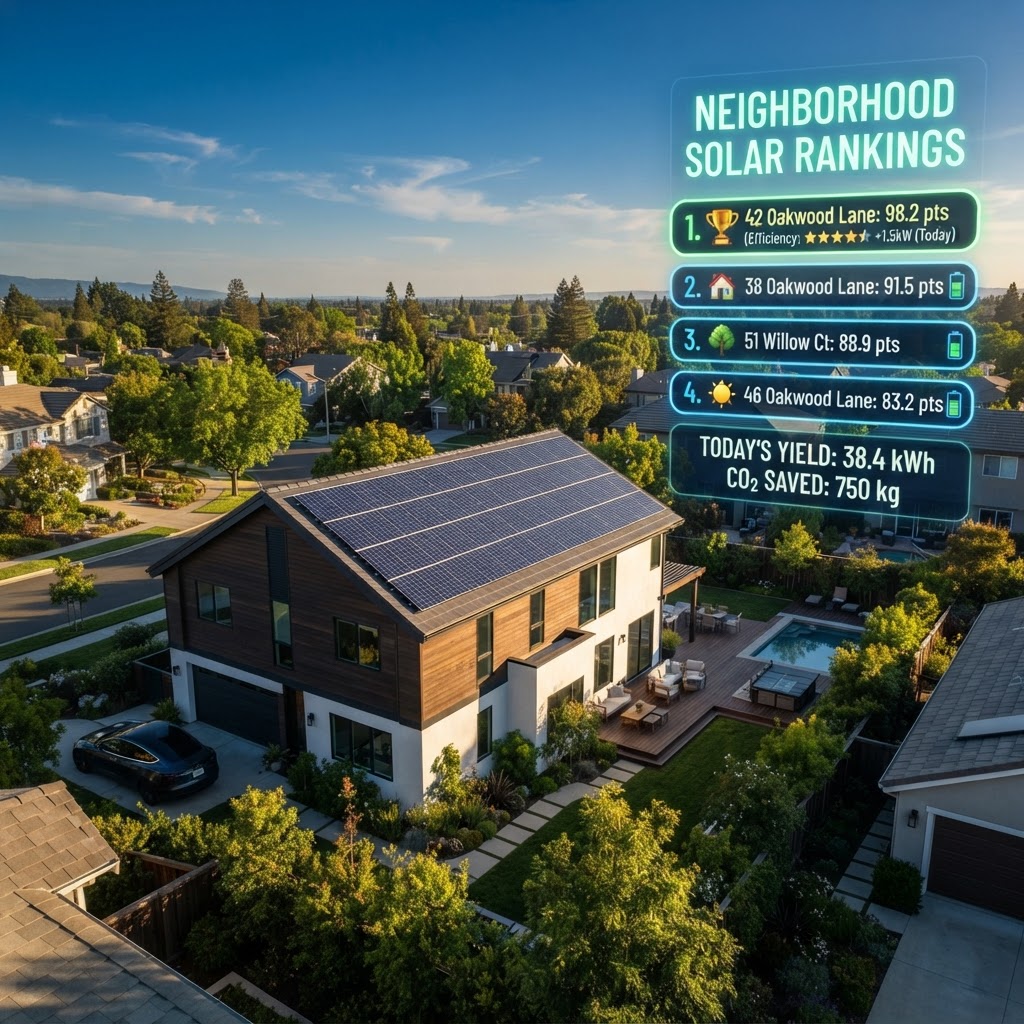
State-by-State Solar Incentives Ranked for 2026: Where Homeowners Still Win
By the Solanano Editorial Team | Updated June 2026
Key Takeaways
- The 30% federal residential solar tax credit (ITC) officially expired December 31, 2025, following the passage of the "One Big Beautiful Bill" (OBBB).
- State-level incentives have never mattered more — six states now offer their own solar tax credits to fill the federal void.
- California homeowners navigating NEM 3.0 face a uniquely complex incentive landscape, but solar-plus-storage still pencils out with the right financial modeling.
- Commercial solar remains federally supported via the Section 48E credit and 100% bonus depreciation — a major tailwind for business owners.
- Regional disparity is widening: where you live now determines whether solar is affordable — or a financial stretch.
The Federal Floor Is Gone. State Incentives Are Now Everything.
For over a decade, the 30% federal residential Investment Tax Credit was the single most powerful driver of U.S. rooftop solar adoption. Homeowners in every state could count on recovering nearly a third of their system cost at tax time — a predictable, bankable incentive that made solar math work almost anywhere.
That floor is gone.
The "One Big Beautiful Bill," enacted in late 2025, eliminated the residential ITC for all systems installed on or after January 1, 2026. The policy shift wasn't entirely unexpected, but the speed of implementation left little runway for homeowners who had been sitting on the fence.
"The expiration of the federal residential credit has forced a market correction, shifting the burden of affordability onto state legislatures and local utility programs," says Dr. Elena Vance, Senior Policy Analyst at the Renewable Energy Institute.
What that means for 2026 is straightforward: your state's incentive stack is now the primary determinant of whether residential solar delivers a compelling return on investment. Here's how the states rank — and what California homeowners in particular need to know.
Tier 1: States With the Strongest Incentive Ecosystems
California
Despite the NEM 3.0 transition dramatically reducing export compensation, California remains one of the best states for solar-plus-storage in 2026 — if you model it correctly. The state's Self-Generation Incentive Program (SGIP) continues to offer battery storage rebates of up to $200 per kilowatt-hour for income-qualified residents and those in high-fire-risk zones. Utilities like SCE and BWP maintain time-of-use rate structures where stored solar energy delivers real, measurable bill savings during peak evening hours.
The key distinction under NEM 3.0 is that the value of solar has shifted decisively from grid export to self-consumption. Systems paired with batteries — what we at Solanano call a nano-grid — are purpose-built for this environment. A properly sized solar-plus-storage system in Southern California can still achieve a 7–10 year payback, but only with hyperlocal financial modeling that accounts for your specific utility, rate schedule, and load profile.
Massachusetts
Massachusetts earns its place at the top tier with one of the most comprehensive state-level incentive stacks in the country. The Solar Massachusetts Renewable Target (SMART) program continues to provide long-term fixed incentive payments for solar generation, layered on top of a 15% state income tax credit (capped at $1,000). Net metering remains robust, and the state's aggressive clean energy mandates keep utility solar programs well-funded.
New York
New York offers a 25% state tax credit up to $5,000 — one of the highest dollar-value state credits available in 2026. Combined with the NY-Sun Megawatt Block incentive program and strong net metering protections, New York homeowners can offset the loss of the federal ITC more effectively than in most other states.
New Mexico
New Mexico's 10% state solar tax credit (up to $6,000 over four years) pairs with some of the best solar irradiance in the country. High sun hours and a meaningful state credit make this a Tier 1 market despite its smaller installed base.
Tier 2: States With Meaningful But Incomplete Incentive Coverage
Arizona
Arizona offers a 25% state tax credit capped at $1,000 — modest in dollar terms but still meaningful. More importantly, Arizona's combination of exceptional irradiance, relatively low installation costs, and net metering policies (which survived recent utility challenges) keeps solar economics competitive. The absence of a state sales tax on solar equipment also adds measurable savings.
Hawaii
Hawaii's 35% state tax credit is the highest percentage state credit in the nation — but it's capped at $5,000 for most residential systems. Given Hawaii's extremely high electricity rates (often exceeding $0.40/kWh), solar ROI here is among the best in the country even with diminished federal support. Battery storage is essentially mandatory given the state's island-grid constraints and solar curtailment policies.
South Carolina
South Carolina provides a 25% state tax credit spread over five years. It's a slower payback mechanism than a lump-sum credit, but still substantial. The state's net metering rules remain homeowner-friendly, and installation costs in the Southeast tend to run below the national average.
Tier 3: States Where Solar Works on Economics Alone — But Incentives Are Thin
Iowa
Iowa has quietly built an impressive 1,232 MWdc of installed solar capacity, powering approximately 160,652 homes statewide. The growth has been driven less by state tax policy and more by falling installation costs and net metering access. Iowa does offer a state solar tax credit (currently paused for new applications as of mid-2026 — check for program reopening), which, if restored, would push it toward Tier 2. For now, Iowa homeowners rely primarily on net metering and federal-commercial-side incentives where applicable.
Tennessee
Tennessee reports 1,206 MWdc of installed solar capacity alongside 1,384 MWh of battery storage — a storage-to-solar ratio that signals strong grid-resilience investment in the state. Tennessee has no state income tax on wages (and therefore no traditional solar income tax credit mechanism), but TVA's Green Power Providers program and local utility rebates provide some offset. Economics are driven largely by avoided cost and low installation pricing in the region.
Washington State
Washington's 955 MWdc of installed capacity ranks 40th nationally — a surprisingly low figure for a state with strong environmental values. The gap is largely explained by the state's cheap hydropower rates, which make solar payback periods longer than average. Washington does exempt solar equipment from state sales tax, and net metering is available, but without a dedicated solar tax credit, the incentive stack remains thin.
The Commercial Solar Opportunity: A Bright Spot in 2026
While residential markets absorb the shock of federal credit expiration, the commercial sector is accelerating.
"While residential growth may face headwinds in 2026, the commercial sector is seeing a surge in activity driven by the 100% bonus depreciation and the 48E tax credit," says Marcus Thorne, Director of Solar Finance at CleanGrid Analytics.
Under the OBBB, commercial solar asset owners can now write off 100% of project value in the first year through reinstated bonus depreciation — a powerful cash flow tool for business owners and commercial property investors. The Section 48E investment tax credit at 30% remains intact for commercial projects meeting prevailing wage and apprenticeship requirements.
For California business owners — particularly those operating under SCE or PG&E commercial rate schedules with significant demand charges — a commercial solar-plus-storage system with first-year bonus depreciation can deliver exceptional after-tax economics in 2026.
The Growing Divide: States Without Incentives Face Steeper Barriers
The loss of the federal residential credit has exposed a fault line in U.S. solar policy. States without their own tax credits, favorable net metering rules, or utility rebate programs are seeing measurable slowdowns in residential adoption.
Key risk factors for homeowners in incentive-light states:
- No state solar tax credit to replace the expired federal 30%
- Net metering rollbacks reducing the value of grid-tied solar export
- High financing costs that rely on the ITC to make loan payoffs work
- Lack of storage incentives in states with grid reliability concerns
States in this category — including much of the Southeast (outside South Carolina), the Mountain West (outside New Mexico), and parts of the Midwest — are seeing lengthening payback periods and softer installer activity in Q1–Q2 2026.
What California Homeowners Should Do Right Now
California's incentive landscape is genuinely complex in 2026 — more so than any other state. NEM 3.0, SGIP eligibility windows, time-of-use rate optimization, and the nuances of working with SCE versus BWP versus PG&E all affect system design and financial outcomes in ways that generic national solar calculators simply cannot capture.
This is precisely why independent, hyperlocal analysis matters. Getting a quote from an installer is not the same as getting an independent financial model. Installers have an inherent interest in selling systems; an independent advisor has an interest in telling you the truth about your ROI.
Bottom Line
2026 is a pivot year for residential solar in the United States. The federal safety net is gone, and the market is fragmenting along state lines. The best opportunities exist in California (with storage), Massachusetts, New York, New Mexico, and Hawaii — states where the incentive stack remains robust enough to deliver compelling returns even without federal support. For homeowners in thin-incentive states, the calculus requires careful, site-specific analysis before committing capital. Commercially, the picture is brighter than it's been in years, driven by bonus depreciation and the intact Section 48E credit.
The single most important thing you can do before signing any solar contract in 2026 is get independent, conflict-free advice — because where you live, who installs your system, and how it's designed will determine whether solar is one of the best financial decisions you've ever made, or an expensive lesson in fine print.
Ready to understand exactly what solar is worth for your home in 2026? Get a free, no-obligation solar assessment from Solanano — California's independent solar advisory service — and find out what your incentive stack actually looks like before you commit to anything.


