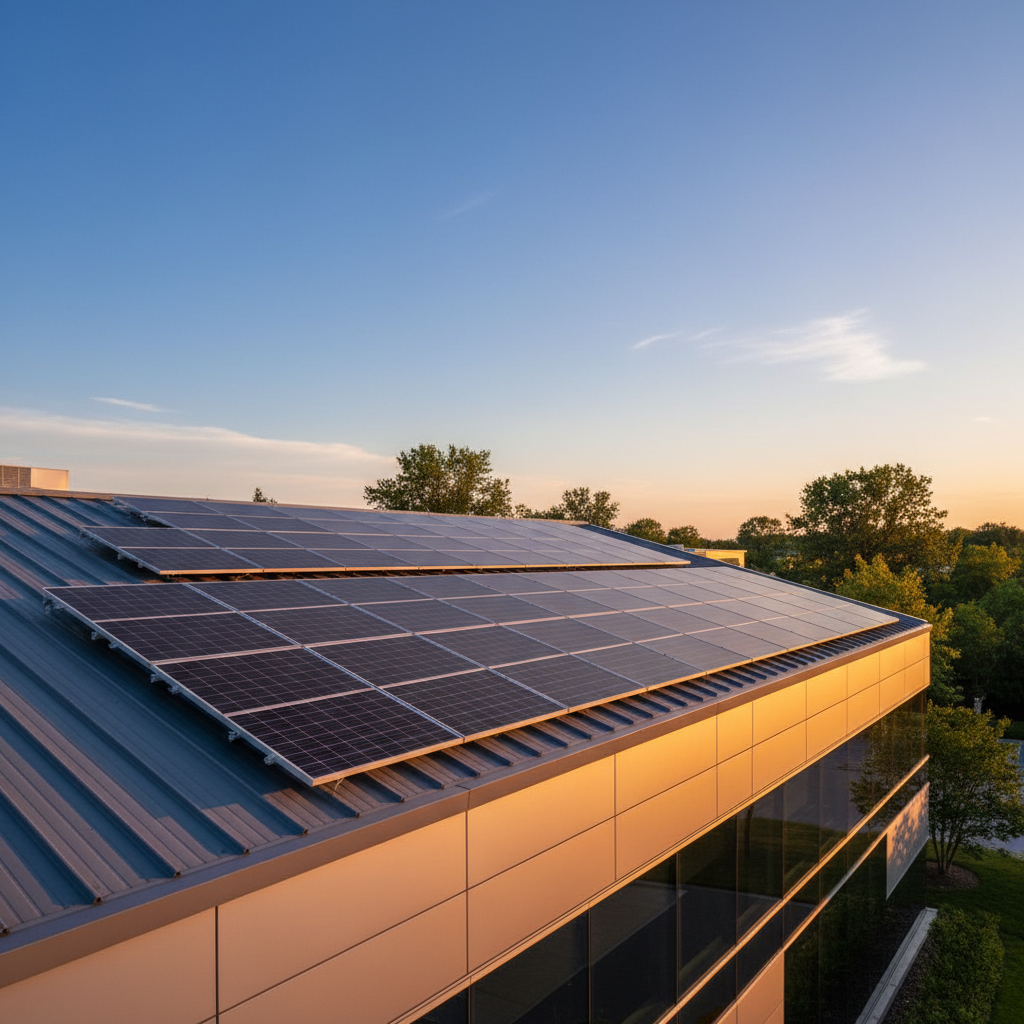
How AI Is Making Solar Proposals Accurate to Within 2% of Actual Output
By a Senior Solar Energy Journalist | Updated June 2026
Key Takeaways
- Top-tier AI solar design platforms now achieve a mean absolute error (MAE) of just 1.8% between proposed and actual 12-month energy production — a historic industry milestone.
- Sub-5 cm LiDAR data combined with deep learning has reduced onsite revision rates by 85% compared to 2023 satellite-only baselines.
- AI-automated site surveys have slashed soft costs by nearly 70%, dropping design-to-permit expenses from $3,000 to just $800.
- The shift from static weather models to Dynamic Digital Twins is fundamentally changing how solar proposals are built, financed, and trusted.
- Financial institutions are now accepting AI-generated production reports as bankable data — without requiring physical audits.
The Accuracy Problem That Held Solar Back for a Decade
For most of the solar industry's modern history, the gap between what a proposal promised and what a system actually delivered was wide enough to drive a truck through. Installers routinely padded estimates by 10–15% to manage homeowner expectations. Lenders demanded physical audits before underwriting. And customers who discovered their system underperformed by even 8% felt — rightfully — misled.
That era is over.
In early 2026, top-tier AI-driven solar design software achieved a mean absolute error (MAE) of 1.8% between proposed production and actual 12-month energy yield. To put that in plain terms: if an AI platform tells you your rooftop system will produce 12,000 kWh in its first year, you can now expect to see somewhere between 11,784 and 12,216 kWh on your inverter's annual report. That's not a rounding error — that's engineering precision.
So how did the industry get here, and what does it mean for homeowners, installers, and the broader clean energy transition?
The Technology Stack Behind Sub-2% Accuracy
LiDAR Meets Deep Learning
The single biggest technical leap of the past 24 months has been the marriage of sub-5 centimeter LiDAR scanning with deep learning neural networks. Where older satellite-based tools could approximate roof pitch and shading obstructions, sub-5 cm LiDAR captures the actual geometry of a rooftop — every dormer, every vent pipe, every inch of edge setback — with surgical precision.
Marcus Thorne, Chief Technology Officer of Helios AI Systems, explains the impact directly: "The convergence of LiDAR and deep learning has finally closed the 'accuracy gap.' We are now seeing deviations of less than 2% between what the AI proposes and what the inverter reports."
The numbers back him up. Integration of this LiDAR data into AI modeling has reduced onsite revision rates by 85% compared to 2023 benchmarks when satellite imagery alone was the standard. Fewer surprises during installation means lower costs, faster timelines, and proposals that hold up in the real world.
Dynamic Digital Twins Replace Static Weather Models
For decades, solar proposals were built on Typical Meteorological Year (TMY) data — a static composite of historical weather averages compiled by NREL and similar agencies. TMY data is reliable in a broad sense, but it cannot account for the micro-climate quirks of a specific neighborhood, a tree that has grown 15 feet taller since the dataset was compiled, or the increasingly erratic weather patterns driven by climate change.
The industry's answer is the Dynamic Digital Twin — a continuously updated, AI-powered virtual replica of a specific solar installation that adjusts in real time for:
- Panel degradation curves unique to that system's age and manufacturer
- Micro-climate drift, including localized urban heat island effects
- Seasonal shading changes as deciduous trees leaf out and drop their leaves
- Real-time irradiance data fed from nearby weather stations and satellite feeds
This is not a theoretical advance. In October 2025, a coalition of solar software providers established the Interoperable Digital Twin Standard, specifically designed to eliminate the 3D modeling data variance that had previously made cross-platform comparisons unreliable. That standard is now the backbone on which the industry's most accurate proposals are built.
Infrared-Enhanced Satellite Analysis
One of the more persistent headaches in solar forecasting has been morning-mist error — the tendency of traditional satellite imagery to misread cloud cover and atmospheric moisture in coastal and inland valley regions during early morning hours, historically skewing annual production estimates by 3–6% in affected markets.
The fix has come in the form of Infrared-Enhanced Satellite Analysis, which uses thermal infrared wavelength data to cut through atmospheric interference that visible-light satellites miss entirely. Combined with machine learning models trained on years of actual production data from those same geographies, this approach has largely eliminated the morning-mist blind spot that once plagued proposals in markets like San Francisco, Seattle, and the Gulf Coast.
Real-Time Intelligence: From Proposal to Perpetual Optimization
Accuracy at the proposal stage is only half the story. What happens after installation is equally important — and AI is reshaping that phase just as dramatically.
AI-enhanced solar management systems now increase total energy output by an average of 15% through real-time irradiance and tilt optimization. Systems equipped with this technology continuously monitor live weather feeds, adjust panel orientation where motorized racking allows, and redistribute energy flow across strings to minimize the impact of partial shading from passing clouds.
This connects directly to one of 2026's most important technical trends: Irradiance Now-casting. Using machine learning models trained on high-frequency satellite imagery and ground-level sensors, now-casting systems predict shading events from passing cloud cover in sub-15 minute increments. The practical result is that a smart inverter can begin rerouting power flow before a cloud even reaches the array — squeezing additional production out of every available minute of sunlight.
In January 2026, Tesla Energy underscored the direction the industry is heading when it released its "Agentic AI" update for Powerwall 4, enabling the system to predict household energy demand with 98% accuracy. Paired with now-casting irradiance data, a Powerwall 4 can now decide — autonomously — whether to store incoming solar production, feed it to the grid for export credits, or preemptively charge in anticipation of an incoming cloudy period. That is a qualitatively different kind of intelligence than anything the residential solar market has seen before.
The Financial Ripple Effect: Bankable Data Without Physical Audits
Perhaps the most consequential downstream effect of this accuracy revolution is playing out in boardrooms and loan underwriting departments, not on rooftops.
Dr. Elke Lorenz, Group Leader for Solar Energy Meteorology at Fraunhofer ISE, frames it with striking clarity: "By 2026, the digital twin of a residential roof has become so precise that financial institutions are accepting AI-generated production reports as bankable data without physical audits."
This is a seismic shift. Traditionally, lenders financing solar installations — whether for homeowners, commercial property owners, or solar-as-a-service providers — required expensive third-party physical audits to validate production estimates before issuing loans or green bonds. Those audits added cost, time, and friction to every deal.
The removal of that requirement, enabled entirely by the precision of modern AI modeling, has material consequences:
- Faster financing approvals for residential and commercial projects
- Lower transaction costs across the solar loan and PPA markets
- Expanded access to solar financing for lower-income households who cannot afford lengthy approval delays
- New investment vehicles built on AI-validated solar production as a credible, auditable asset class
The global solar AI market is valued at approximately $3.2 billion in 2026, driven by a 14.3% CAGR in predictive maintenance and design automation. That growth is not happening in a vacuum — it reflects the industry's collective recognition that AI accuracy is now a genuine competitive advantage and a financial necessity.
The Workflow Revolution: From Lead to Permit in Hours
The accuracy gains extend well beyond the technical modeling layer. Agentic AI is now being integrated into solar CRM platforms to automate the entire customer journey — from the moment a lead fills out a web form to the moment a permitted design package lands on a municipal desk.
Consider what this looks like in practice for a forward-thinking installation company in 2026:
- Lead qualification is handled by an AI agent that analyzes utility bills, roof satellite imagery, and local incentive stacks within minutes of inquiry
- Preliminary design is generated automatically using LiDAR and Dynamic Digital Twin data
- Proposal generation produces a bankable production estimate with sub-2% MAE, customized financing options, and projected ROI over 25 years
- Municipal permit packaging is assembled and submitted automatically, with the AI pre-populating jurisdiction-specific forms based on the approved design
The cost impact of this automation is stark. AI-automated site surveys have reduced project soft costs by nearly 70%, dropping average design-to-permit expenses from $3,000 to $800. For an industry where margin compression has been a persistent challenge, that is not an incremental improvement — it is a structural cost advantage.
April 2026 saw the launch of the GNAi platform, marking the industry's first move toward fully autonomous grid optimization with real-time smart meter synchronization. Google, meanwhile, expanded its AI energy optimization suite in February 2026 to include 24/7 carbon-free energy tracking for distributed solar networks across the U.S., adding a layer of grid-level intelligence to the individual system data that AI platforms are already processing.
What This Means for Homeowners Evaluating Solar Today
If you are a homeowner who has previously received a solar proposal and been uncertain whether to trust the numbers, the landscape has changed materially. Here is what you should expect from any reputable installer in 2026:
- A production estimate with documented MAE below 3%, ideally supported by LiDAR-based site modeling
- A Dynamic Digital Twin projection that accounts for your specific micro-climate, not just regional TMY averages
- Real-time monitoring integration that lets you verify actual production against proposal benchmarks month by month
- Financing options underwritten without requiring you to pay for a third-party physical audit
If an installer cannot offer these capabilities, that is worth asking about — because their competitors almost certainly can.
Bottom Line
The solar industry's accuracy problem has been solved. The convergence of sub-5 cm LiDAR, Dynamic Digital Twins, Infrared-Enhanced Satellite Analysis, and Agentic AI has driven proposal error rates below 2% — transforming solar from a trust-me investment into a data-verified financial asset. For homeowners, this means the proposal you receive today is the most reliable document the industry has ever produced. For the industry, it means a new era of credibility, bankability, and scale.
Ready to see what today's AI-powered solar modeling can do for your home? Get your free solar proposal today and discover exactly how much you can save — accurate to within 2% of what your system will actually produce.


