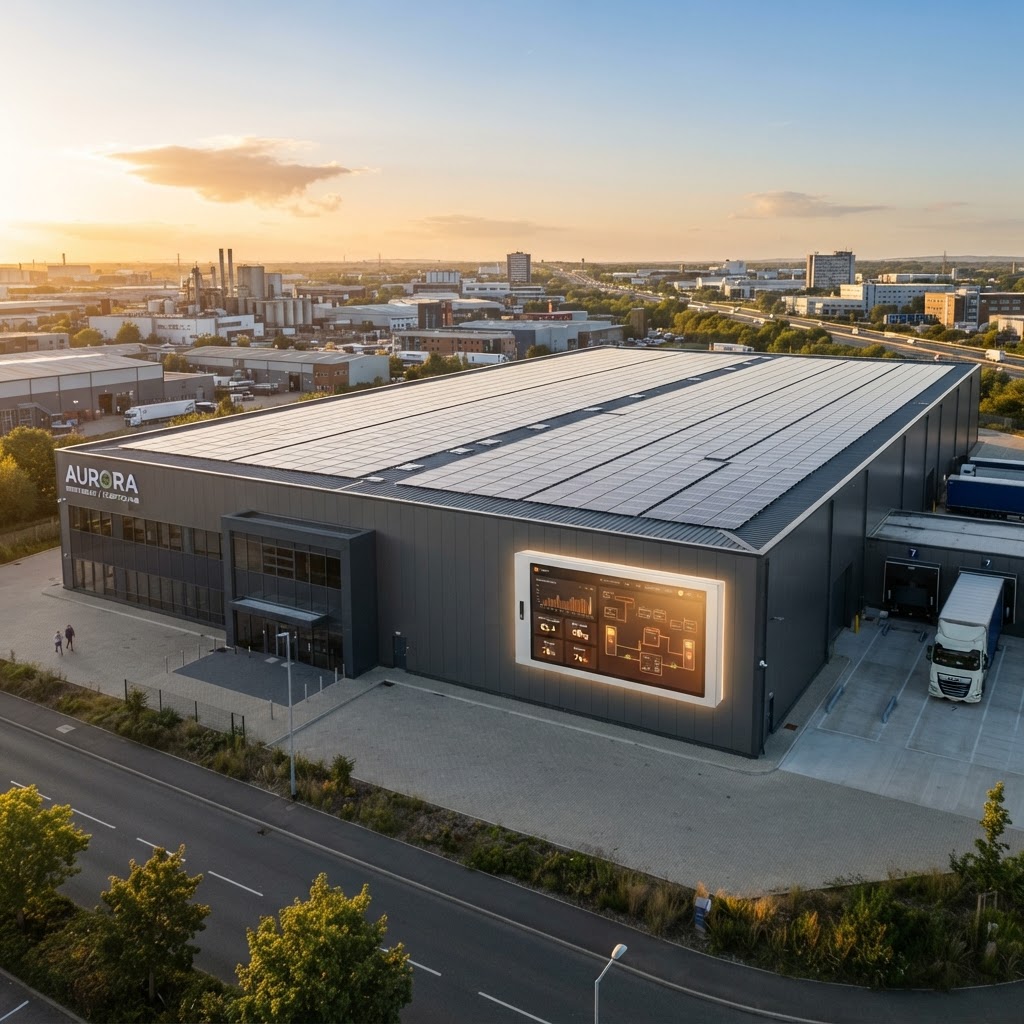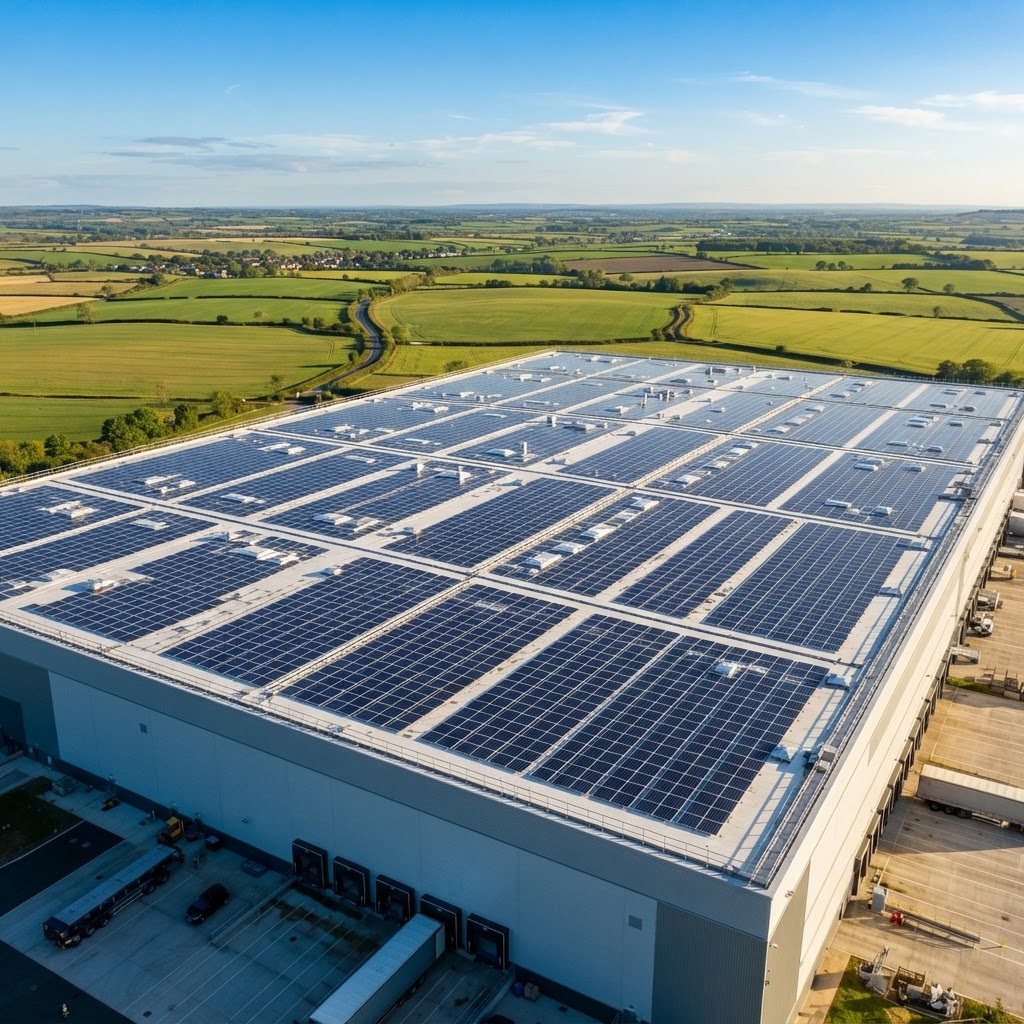
How Warehouses Are Cutting Energy Bills 60% With Rooftop Solar
Key Takeaways
- Modern warehouses are achieving energy cost reductions of 40–65% by combining rooftop solar, battery storage, and smart energy management systems.
- Payback periods have compressed to just 2–4 years in high-rate markets like California, with annual savings frequently exceeding $200,000 for large facilities.
- The federal tax credit deadline tied to the One Big Beautiful Bill Act (July 4, 2026 construction-start) created a major surge in warehouse solar projects throughout 2025–2026.
- Solar + Storage configurations are now standard, enabling 24/7 load management far beyond what solar-only systems can deliver.
- AI-driven energy optimization and ultra-lightweight panel technology are breaking down the final barriers to adoption on older warehouse roofs.
Commercial electricity rates in California didn't creep up quietly. Between 2015 and 2026, they surged by 50%, hammering logistics operators whose facilities run conveyor belts, refrigeration units, dock levelers, and lighting around the clock. For warehouse owners and distribution center operators, the math has become brutally simple: continue absorbing rate increases, or take control of your own energy supply.
Increasingly, they're choosing control. And the results are hard to argue with.
"The 60% reduction in energy bills isn't just a goal anymore; it's the new baseline for warehouses that integrate high-efficiency bifacial modules with intelligent battery dispatch," says Sarah Jenkins, Lead Analyst at SolarLogistics Research. That figure — once aspirational — is now a documented outcome for facilities that deploy the full stack: solar generation, battery storage, and intelligent software to tie it all together.
Here's what's driving the transformation, what it looks like on the ground, and what California warehouse operators specifically need to know before moving forward.
The Business Case Has Never Been Stronger
The numbers behind warehouse solar have reached a tipping point. According to analysis published by Promise Energy in early 2026, modern warehouses and distribution centers are achieving energy cost reductions of 40–65% through the combined integration of rooftop solar, battery storage, and smart energy management systems. For a large-scale facility paying $400,000 or more annually in electricity costs, that translates to savings well north of $200,000 per year.
Payback periods, historically the sticking point in commercial solar conversations, have compressed dramatically. In high-rate electricity markets — California chief among them — typical payback windows now land at 2–4 years. That's not a lease-versus-own financial engineering trick; that's genuine, first-principles ROI driven by the gap between the cost of generating your own solar power and what the utility would otherwise charge you.
Solar's dominance in the broader energy market reflects this momentum. According to the Solar Energy Industries Association's 2025 Year in Review, solar PV accounted for 54% of all new electricity-generating capacity additions in the United States in 2025 — a majority of the entire nation's new power infrastructure. Warehouses are a significant part of that story.
What's Actually Happening on Warehouse Rooftops Right Now
The policy and market landscape of 2025–2026 created an unusual convergence of urgency and opportunity. The One Big Beautiful Bill Act (OBBBA), signed into law in July 2025, established a construction-start deadline of July 4, 2026 for projects to qualify for full federal investment tax credits. That hard deadline triggered a wave of warehouse solar development as owners and developers rushed to break ground and lock in maximum incentives.
The real-world project pipeline reflects it:
- Naples Airport in Florida completed installation of a rooftop solar array on its new warehouse storage building in July 2026, directly citing rising utility costs as the primary driver.
- Public Storage announced a major community solar deal in July 2026 to solarize multiple sites across Northern Illinois, leveraging the sheer scale of its rooftop footprint for both onsite use and local grid support.
- A July 2026 study by the Keystone Research Center found that warehouse rooftops in Pennsylvania's Lehigh Valley alone could generate 535 gigawatt-hours of electricity annually — enough to power 52,000 households.
Scale that logic to California's Inland Empire, the Central Valley, or the massive distribution corridors along I-5 and I-10, and the untapped potential becomes staggering. Analysis of UK warehouse infrastructure — which identified 25 gigawatts of potential solar capacity across 165 million square meters of unused rooftop space — offers a useful parallel for what remains uncaptured in dense American logistics markets.
David Chen, VP of Sustainable Infrastructure at Apex Distribution, frames the shift this way: "By 2026, we've seen the warehouse roof transition from a maintenance liability to a primary revenue-generating asset, often producing more power than the facility itself can consume."
The Four Technologies Making 60% Savings Achievable
Getting from a rooftop solar installation to genuine 60% bill reduction requires more than panels. Here's what the full system stack looks like in 2026:
1. High-Efficiency Bifacial Solar Modules
Modern bifacial panels capture light from both sides, boosting output by 10–20% over standard monofacial panels — particularly valuable on warehouse roofs where reflected light from rooftop membranes and surrounding surfaces adds meaningful generation. Combined with optimized racking systems, today's bifacial arrays extract significantly more kilowatt-hours per square foot than installations from even five years ago.
2. Ultra-Lightweight Panel Systems
One of the last major barriers to warehouse solar adoption has been structural: many older flat-roof warehouse buildings simply weren't designed to support the ballasted racking systems used in conventional commercial solar. Ultra-lightweight solar panel solutions — some weighing under 3 kg per square meter — are dissolving that constraint, opening millions of square feet of previously inaccessible rooftop to viable solar deployment.
3. Battery Storage for 24/7 Load Management
Solar generates during daylight hours. Warehouses operate around the clock. That mismatch, once a serious limitation, is now solved by pairing solar with battery storage — a combination that has become standard on virtually all new warehouse solar projects. Battery systems allow facilities to:
- Shift solar energy captured during peak generation hours to evening and overnight operations
- Avoid expensive demand charges by discharging during peak utility rate windows
- Maintain operations during grid outages, a growing concern for California facilities managing wildfire-related Public Safety Power Shutoff (PSPS) events
- Optimize participation in California's Self-Generation Incentive Program (SGIP), which provides meaningful rebates for battery storage installations
4. AI-Driven Energy Optimization Software
AI-powered energy management platforms are rapidly becoming standard infrastructure for warehouses with solar and storage systems. These platforms analyze historical load patterns, weather forecasts, utility rate schedules, and real-time grid pricing to dynamically dispatch stored energy, predict peak demand events, and continuously maximize the financial return of the entire system. According to RatedPower's 2026 Solar Trends Report, this software layer is no longer an optional upgrade — it's the control layer that separates a good solar investment from a great one.
California-Specific Considerations: What Warehouse Operators Must Understand
California warehouse operators face a more complex policy environment than most of the country — and that complexity cuts both ways.
NEM 3.0 fundamentally changed the economics of solar-only systems in California. Under the current net billing tariff, export rates have dropped significantly compared to NEM 2.0, which means facilities that size systems to export large quantities of power back to the grid will see diminished returns. The corrective strategy is exactly what the market is already delivering: right-sized solar paired with battery storage, designed to maximize self-consumption rather than export.
For California warehouses served by utilities like SCE (Southern California Edison) or BWP (Burbank Water and Power), rate structures vary meaningfully. Demand charges, time-of-use (TOU) pricing windows, and available tariff options all affect how a solar-plus-storage system should be sized and configured. A system optimized for one utility's rate structure may underperform significantly under another's.
Big-box tenants are adding another layer of pressure. Amazon, Walmart, and other major logistics customers are increasingly requiring their third-party logistics partners and real estate lessors to implement rooftop solar as part of contractual Scope 3 carbon reduction commitments. For warehouse owners with these tenants — or those competing for them — solar is shifting from a financial decision to a commercial necessity.
Tenant vs. Owner: Who Pays, Who Benefits?
One of the most common structural questions in warehouse solar is how to handle the economics when the building owner and the energy consumer are different parties. Several models have emerged:
- Owner-installed, owner-retained: The building owner installs solar, reduces operating costs (if they pay utilities), and increases asset value and lease competitiveness.
- Green lease structures: Costs and savings from solar are explicitly shared between landlord and tenant through lease provisions, aligning incentives and resolving the split-incentive problem.
- Tenant-initiated, landlord-approved: Tenants negotiate rooftop rights and install systems themselves, often with the landlord benefiting from improved roof condition monitoring and eventual ownership upon lease expiration.
- Community solar subscriptions: For facilities where rooftop installation isn't feasible, community solar deals — like the Public Storage Illinois announcement — allow warehouses to offset grid consumption with offsite solar generation.
Bottom Line
Warehouse rooftop solar has crossed from promising technology into proven infrastructure. With energy cost reductions of 40–65% now achievable, payback periods of 2–4 years in California's high-rate environment, federal tax incentives still in play, and battery storage solving the 24/7 operational mismatch that once limited solar's value, there has never been a stronger financial case for warehouse owners and operators to act. The combination of NEM 3.0 dynamics, SGIP battery incentives, and tenant-driven ESG pressure makes California both the most complex and the most rewarding market in the country to get this right — which means the quality of your project advisory team matters as much as the equipment itself.
If you own or manage a warehouse or distribution facility in California and want to understand exactly what rooftop solar and battery storage could deliver for your specific building, utility, and rate structure, get a free solar assessment from Solanano — independent advisors with no equipment to sell and no installation crews to fill, just hyperlocal financial modeling and access to a rigorously vetted network of licensed California solar professionals.