How to Maximize Solar Savings Under NEM 3.0: Consumption Shifting Strategies
Key Takeaways
- NEM 3.0 slashed average California export credits by ~75%, making grid exports nearly worthless compared to the old NEM 2.0 era.
- The new game is self-consumption: using every kilowatt-hour you generate before it touches the grid.
- Battery storage, smart EV charging, and AI-driven energy management systems are the three pillars of a high-performance NEM 3.0 strategy.
- Solar-plus-battery systems now achieve a 7.1-year payback in California — nearly two years faster than solar-only systems.
- With the right load-shifting playbook, California homeowners can hit 90%+ self-consumption rates.
If you installed solar before April 2023, you were playing a fundamentally different game. Under NEM 2.0, sending surplus power to the grid was a winning move — utilities essentially bought your electrons at near-retail rates, and a simple "oversize and export" strategy made financial sense. That era is over.
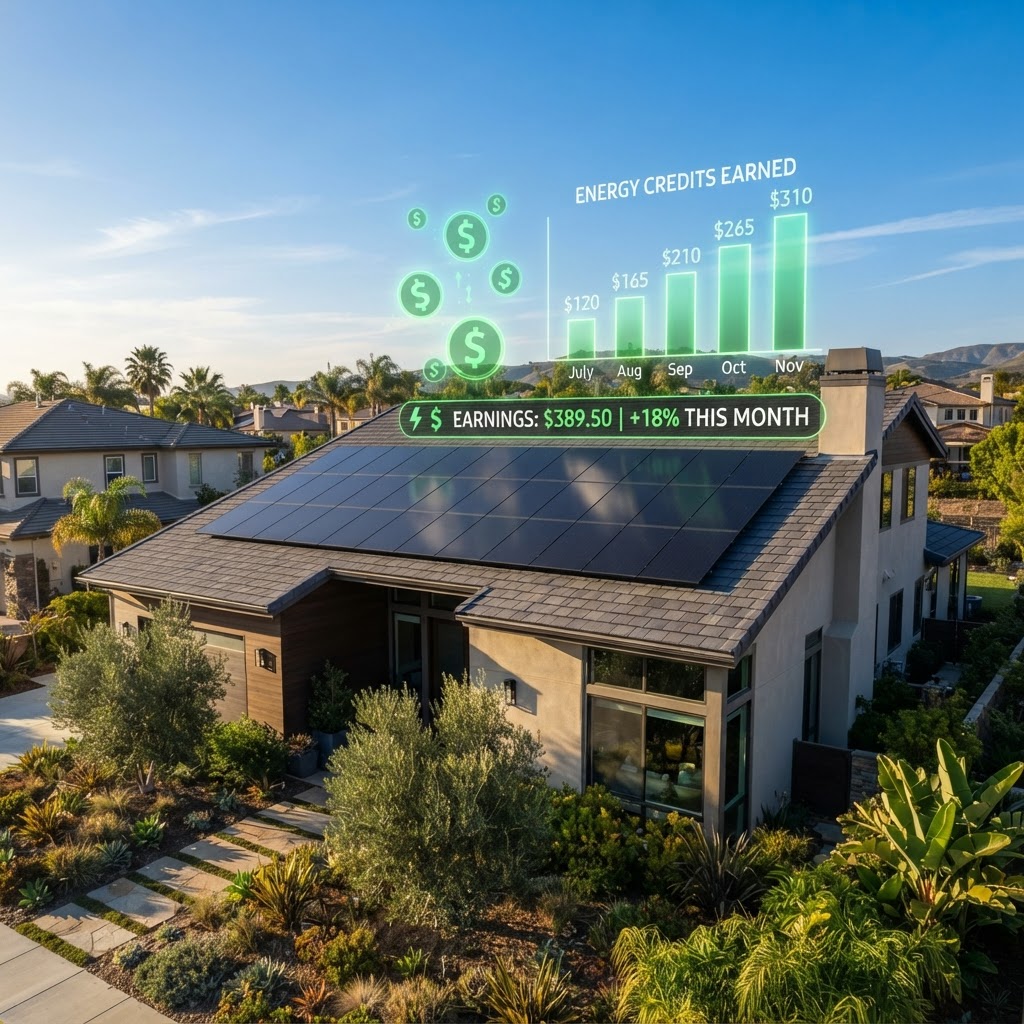
NEM 3.0, which took effect for new applicants in April 2023, reduced average export credits by approximately 75%, dropping what a typical California homeowner earns from grid exports from roughly $50 per month to under $10. The math on exporting your solar production has collapsed. But the math on consuming it yourself has never been better.
This guide breaks down exactly how to engineer your home energy system — and your daily habits — to thrive under NEM 3.0's new economic reality.
Why NEM 3.0 Changed Everything
Under NEM 2.0, your utility acted like a free, full-price storage locker. You generated power at noon, banked the credit, and drew it back at night at a favorable rate. NEM 3.0 ended that arrangement. Export rates are now tied to the Avoided Cost Calculator (ACC), a wholesale-adjacent metric that bears little resemblance to the retail rates you pay when pulling from the grid.
The result is a structural asymmetry: you might pay SCE or PG&E $0.45–$0.55/kWh during peak evening hours (on a TOU-D or TOU-C rate plan), while exporting that same solar energy earns you $0.02–$0.05/kWh. That spread — sometimes 20-to-1 — is precisely why consumption shifting has become the central discipline of residential solar economics in California.
"The solar value proposition hasn't disappeared; it has simply migrated from the grid to the battery. If you aren't shifting your load, you are leaving money on the table." — Dr. Elena Vance, Lead Researcher, Grid Integration Lab
The commercial and industrial sector figured this out fast. C&I solar projects across California have already shifted to solar-plus-battery energy storage (BESS) as the default configuration, not an optional add-on. Residential customers are catching up quickly — California's residential solar storage attach rate has climbed above 80% in 2025, a dramatic leap from below 15% in 2022.
The Battery Imperative: Your Self-Consumption Engine
Battery storage is no longer a luxury upgrade. Under NEM 3.0, it is the mechanism that converts daytime solar surplus into evening-hour bill savings at full retail value.
The numbers are stark. A solar-only system typically achieves 45–60% self-consumption — meaning nearly half your generated power is exported at those low ACC rates. Adding a 13.5 kWh battery (the capacity of a Tesla Powerwall 3 or the Franklin aPower, for example) pushes that figure to 80–90%. That improvement directly translates to avoided grid purchases during the expensive TOU peak window, typically 4–9 PM on most SCE and PG&E rate schedules.
This is why solar-plus-battery systems in California now achieve a payback period of approximately 7.1 years, compared to 9.4 years for solar-only systems under NEM 3.0. The battery pays for itself partly through its own direct savings, and partly by making the solar system dramatically more effective.
What to look for in a residential battery system:
- Usable capacity: 10–15 kWh covers most single-family homes; larger homes or EV owners may need 20+ kWh (stackable systems or whole-home units).
- Continuous power output: Critical for running HVAC, refrigerators, and EV charging simultaneously.
- Software intelligence: The best systems integrate directly with your utility's TOU schedule and adjust charge/discharge cycles automatically.
- SGIP eligibility: California's Self-Generation Incentive Program still offers rebates for battery storage, particularly for customers in high fire-risk zones or with low-income qualifications. This can meaningfully improve your economics.
One product worth noting in Southern California: the Franklin aPower has gained significant market share in Riverside County throughout 2025 and 2026, offering competitive pricing against the Powerwall 3 — a sign that market competition is bringing storage costs down in ways that benefit consumers.
"Under NEM 3.0, the battery is no longer an accessory — it is the engine of the system. We are seeing a total decoupling of solar production from grid reliance." — Marcus Thorne, Director of Residential Energy Strategy
Consumption Shifting Strategy #1: Time-of-Use Alignment
The most fundamental shift NEM 3.0 demands is aligning when you use energy with when your solar is producing it. This sounds simple but requires deliberate restructuring of household routines and appliance scheduling.
High-impact actions:
- Dishwasher and laundry: Run during peak solar production hours (10 AM – 3 PM), not in the evening. Most modern appliances have delay-start features — use them.
- Pool pumps: If you have a pool, programming your pump to run midday can eliminate one of the largest avoidable peak-hour loads in Southern California homes.
- Pre-cooling your home: Run your HVAC hard between noon and 3 PM to "store" thermal energy in your home's mass, reducing the need to run it during peak TOU hours (4–9 PM).
- Water heaters: Heat pump water heaters (HPWHs) are excellent load-shifting tools. A 50-gallon HPWH running at noon uses cheap or free solar electrons and keeps water hot through the evening.
The goal is to flatten or eliminate your grid draws during the 4–9 PM window, when TOU rates are at their highest and your solar panels have stopped producing.
Consumption Shifting Strategy #2: Smart EV Charging
Your electric vehicle is likely the largest discretionary electrical load in your home — and that makes it the most powerful load-shifting tool available to you.
The strategy is straightforward: charge your EV during peak solar production hours, not overnight. If you charge a typical EV with a 40–60 kWh battery pack using your solar surplus, you are effectively storing solar energy in your car at zero grid cost rather than exporting it at $0.03/kWh.
Data backs this up emphatically. EV charging optimization can push total household solar self-consumption rates as high as 93% — essentially capturing nearly all of your solar production at full value. At Solanano, our hyperlocal satellite irradiance modeling shows us exactly how much daily surplus a given rooftop generates seasonally, which lets us right-size this strategy for each household.
Practical steps for EV load shifting:
- Use your EV's built-in scheduled charging to target 9 AM – 3 PM solar windows.
- Smart chargers like the ChargePoint Home Flex or Emporia Smart EV Charger can integrate with home energy management systems to dynamically respond to solar production in real time.
- If you commute and need the car midday, even partial solar charging in the morning before departure captures meaningful value.
Consumption Shifting Strategy #3: AI-Driven Energy Management
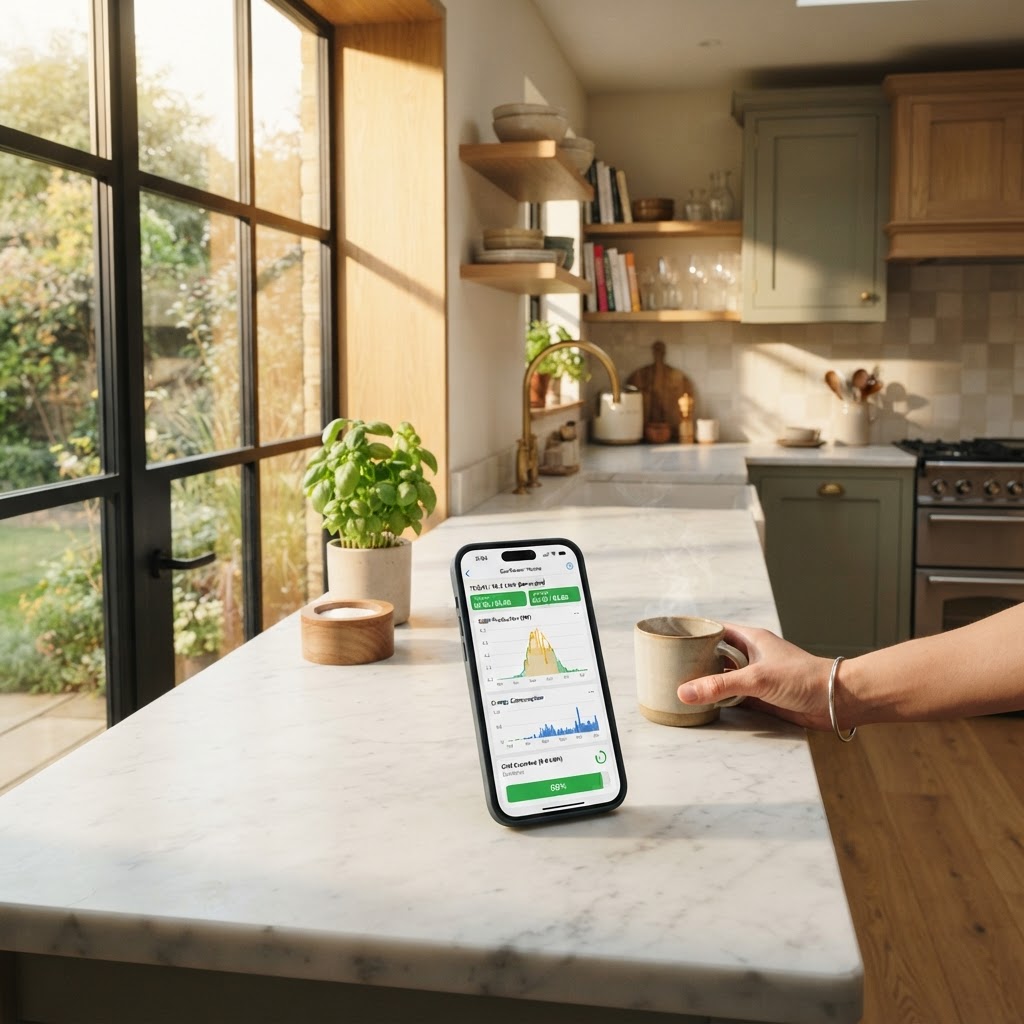
Managing all of these moving parts manually — battery state of charge, EV charging windows, TOU pricing, grid signals — is increasingly impractical. This is where AI-driven Energy Management Systems (EMS) are becoming essential infrastructure for NEM 3.0 households.
Modern EMS platforms from companies like Span, Lumin, and Savant continuously optimize your home's energy flows based on:
- Real-time solar production
- Live TOU pricing signals from your utility
- Battery state of charge and forecast models
- Weather and irradiance predictions
- Programmable appliance schedules
The trend is accelerating. Energy management automation is now a core part of how serious solar-plus-storage integrators design systems — a fundamental shift from the days when a solar installation was simply panels, an inverter, and a net meter agreement.
Research reinforces this direction. UC San Diego's Agile Electrification project is actively modeling residential electrification scenarios to help California homeowners navigate post-NEM 3.0 economics — specifically examining how automated load management interacts with solar and storage to optimize household outcomes.
Putting It All Together: The NEM 3.0 High-Performance Home
A fully optimized NEM 3.0 home looks something like this:
- Appropriately sized solar array — not just maximized for export, but calibrated to daily consumption and seasonal load profiles using real irradiance data.
- 13.5–27 kWh of battery storage — charged daily from solar surplus, discharged during the 4–9 PM peak window to eliminate grid draws at peak rates.
- EV charged midday from solar — capturing the largest discretionary load at zero marginal cost.
- Scheduled appliances — laundry, dishwasher, pool pump, and water heater all running in the solar window.
- EMS platform — automating the above with real-time responsiveness to pricing and production.
This is Solanano's nano-grid philosophy in practice: solar and battery working together not just to reduce bills, but to progressively decouple your home from grid dependency and utility rate volatility.
Bottom Line
NEM 3.0 did not kill the value of residential solar — it relocated it. The homeowners who understand that the new profit center is self-consumption, not export are already locking in 7-year paybacks, near-total grid independence during peak hours, and meaningful insulation from California's relentless utility rate increases. The strategies are not complicated, but they require the right system design, the right equipment, and the right financial modeling from day one.
Getting that foundation right is exactly what Solanano was built to do — independent, conflict-free, and armed with the hyperlocal data and NEM 3.0 expertise to match you with a pre-vetted installer who will design your system for maximum self-consumption, not maximum panel count.
Get your free solar and storage assessment from Solanano today — and find out exactly what a properly engineered NEM 3.0 system can do for your home.